
Last updated October 16, 2026
 Water damage drying
 Fire & smoke cleanup
 Mold remediation
 Storm response
 Sewage cleanup
 Reconstruction
Free visual inspection and a written scope of work before any mitigation begins - photos, moisture readings, and drying logs go in your claim file
The scope we write is the scope we bill. Anything new gets shown to you, in writing, before we touch it.
Get your free estimateThe Complete Guide to Damage Restoration in Fort Lauderdale
The average Fort Lauderdale home is 38 years old, sits within five miles of salt air, and faces 62 inches of rain per year, yet most restoration guides are written as if every house is a 2010 vinyl-sided suburb in Ohio. This guide is different. It’s built specifically for Broward County homeowners who need to understand what actually fails in our concrete-block homes, what drying timelines are realistic in 80% humidity, and what restoration should cost when a Category 3 storm surge pushes sewage through the baseboards. For a detailed 2026 cost breakdown, see our dedicated reference. By the end, you’ll know exactly what questions to ask before anyone touches your property.
Restoration work we handle
Quick Answer
Damage restoration in Fort Lauderdale is the process of removing water or fire damage, drying the structure, treating mold, and rebuilding what was torn out. In our local market it typically costs $1,200 to $4,500 for clean-water extraction and drying, $8,000 to $28,000 or more for sewage or storm surge jobs, and follows a strict 72-hour mold window that starts the moment water touches drywall. The single most important thing a homeowner can do is call a licensed restoration contractor immediately and get a written price before any equipment is set up.
Table of Contents
- How Fort Lauderdale Homes Fail Differently Than the Rest of the Country
- The Three-Phase Restoration Sequence Specific to Fort Lauderdale
- Assignment of Benefits (AOB): What Florida Law Requires Before Work Begins
- Real Cost Ranges for Fort Lauderdale Restoration Jobs
- How to Verify a Florida Restoration Contractor’s Credentials
- What the Kingswell Way Means on a Fort Lauderdale Job Site
- Common Mistakes to Avoid
- When to Call a Professional
- Frequently Asked Questions
- The Bottom Line
How Fort Lauderdale Homes Fail Differently Than the Rest of the Country
Most national restoration guides assume wood-frame construction with gypsum board over studs and a crawl space underneath. That’s not what we have here. Fort Lauderdale’s housing stock is dominated by CBS, concrete block and stucco, which changes everything about how water moves through a structure and how long drying actually takes.
In a wood-frame home, water that penetrates drywall tends to wick upward through studs and insulation. You can often cut out the affected section, dry the cavity, and patch it. CBS construction doesn’t behave that way. Concrete block is porous. When water intrudes, whether from a burst supply line or a storm surge, the block itself absorbs moisture and holds it. Stucco on the exterior acts as a sponge, and the interior furring strips that hold drywall against the block create narrow channels where humid air gets trapped.
What this means in practice is that Fort Lauderdale drying timelines run longer than the national averages restoration software predicts. A Category 1 water loss that might dry in three days in a dry-climate wood-frame house can take five to seven days here because the relative humidity, or RH, inside wall cavities rarely drops below 60% without aggressive mechanical dehumidification. We use psychrometric drying, which is the practice of measuring temperature, humidity, and moisture content in building materials to calculate exactly how much drying energy is needed. The numbers don’t lie, and in Fort Lauderdale they consistently show slower drying than national benchmarks would suggest.
Salt air adds a second layer of complexity that most guides never mention. Over decades, salt-laden air corrodes metal components inside walls, electrical boxes, plumbing fittings, and fasteners. When water intrusion happens, corrosion is already well underway. We routinely open walls in homes near Las Olas, Victoria Park, and Coral Ridge and find electrical boxes with rust blooms that a restoration crew in Orlando would never see. This affects the scope of repair work: more electrical component replacement, more fastener replacement, and more attention to what gets sealed behind new drywall.
For homeowners who want to understand their specific home’s vulnerabilities, our Water Damage Restoration in Fort Lauderdale page covers the most common intrusion points we see by neighborhood.
The Three-Phase Restoration Sequence Specific to Fort Lauderdale
Restoration work in Broward County doesn’t follow the same playbook used in drier climates. We structure every Fort Lauderdale job around three phases, all of which need to move within the first 72 hours to prevent mold colonization. Here’s what that looks like in practice, and watch for these warning signs that your home may need immediate attention.
Phase 1: Tropical Moisture Extraction and Containment
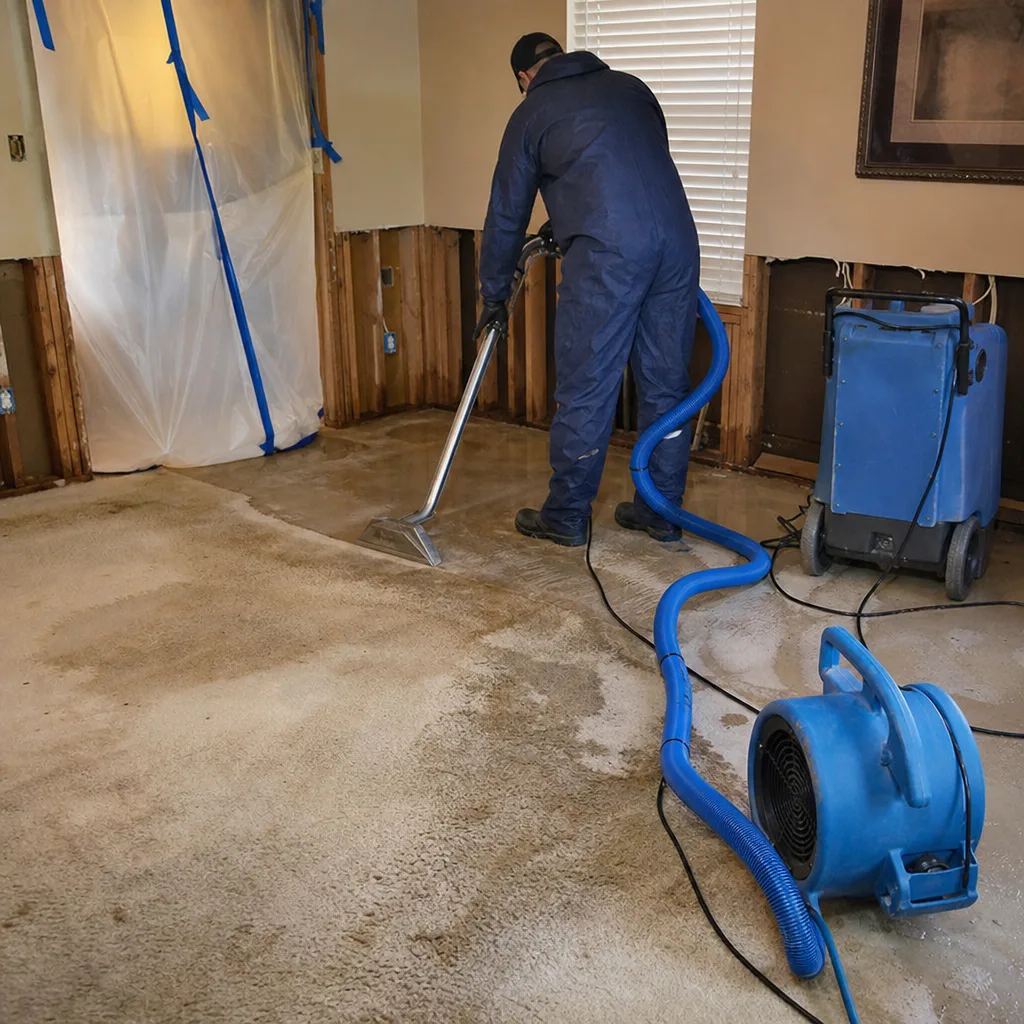
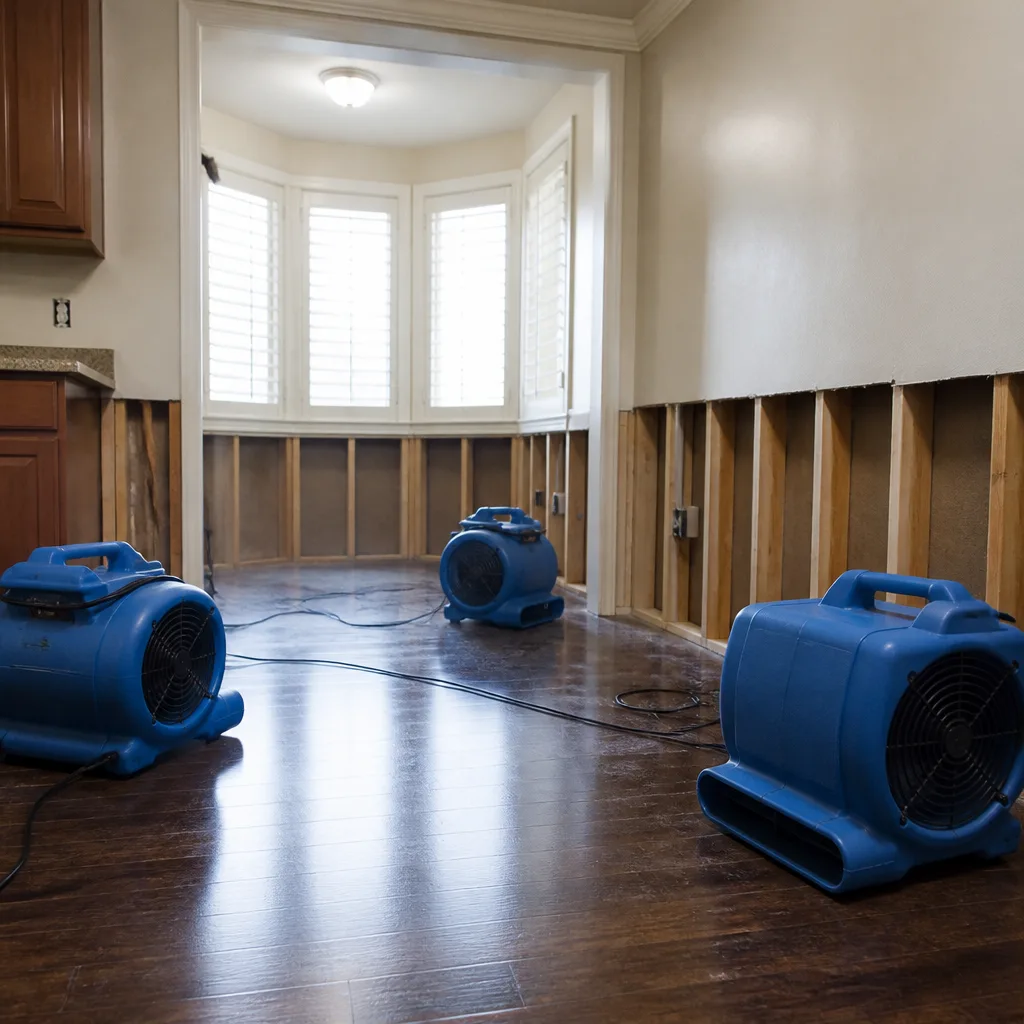
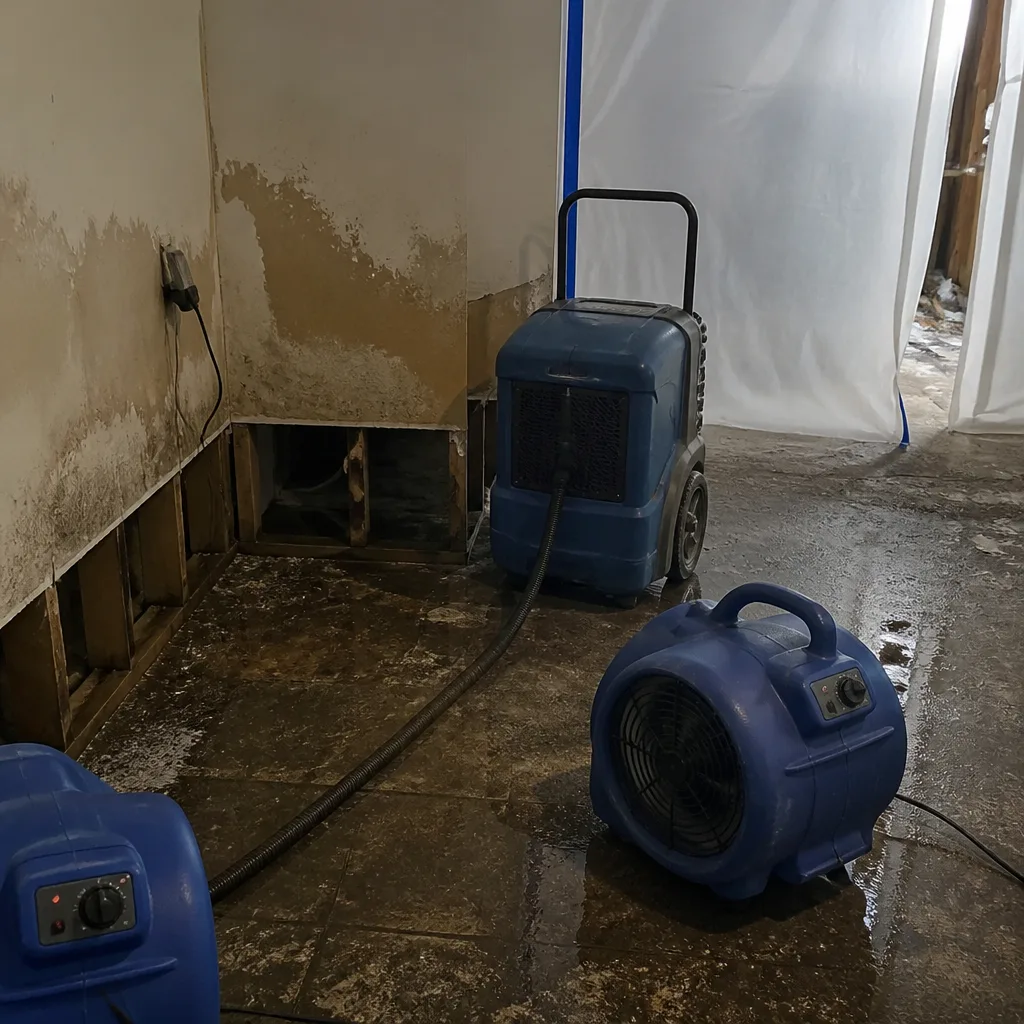
The first hours after water damage are about removing standing water and stopping further intrusion. That means extraction pumps, wet vacs, and containment barriers made of 6-mil polyethylene sheeting to prevent aerosolized water droplets from spreading to unaffected rooms. In a Fort Lauderdale summer, when outdoor humidity sits at 80% or higher, we can’t rely on opening windows. We seal the affected area and run Dri-Eaz and Phoenix dehumidifiers that pull moisture out of the air and out of the block walls behind the drywall.
Containment matters more here than elsewhere because the outdoor air is humid enough to feed mold growth on its own. A restoration crew that sets up air movers and leaves windows open is working against itself in this climate.
Phase 2: Salt-Air Corrosion Treatment
Phase 2 is where Fort Lauderdale restoration diverges from the national script. Once materials are removed and the structure is drying, our technicians inspect exposed metal for corrosion. This includes electrical boxes, outlet receptacles, plumbing straps, and any fasteners that hold framing or furring strips to the concrete block. Where corrosion is found, those components get replaced rather than cleaned and reused, because salt-infused corrosion continues to degrade even after the area is dry.
This step is easy to skip. It’s also one of the most common reasons a water damage repair fails within a year in coastal South Florida. A contractor who patches drywall over corroded electrical boxes is creating a future fire hazard and a future claim. The Kingswell Guarantee, the written promise that governs every job we do, exists precisely because shortcuts like this are common in our market.
Phase 3: Mold Window Management
Mold colonization typically begins 48 to 72 hours after water touches drywall or other cellulose materials. In Fort Lauderdale, that window can shrink. When indoor temperatures sit above 77 degrees and RH stays above 60%, mold can establish in as little as 36 hours. We treat the mold window as a hard deadline, not a guideline.
Phase 3 involves moisture mapping with penetrating and non-penetrating meters, which tell us whether the block behind the drywall has dropped below acceptable moisture levels, and treatment of any suspect areas with EPA-registered antimicrobial products. Where visible mold is present, we follow the protocols covered on our Mold Remediation in Fort Lauderdale page. The key message here: if water has been sitting for more than two days, assume mold is present even if you can’t see it.
Assignment of Benefits (AOB): What Florida Law Requires Before Work Begins
Florida’s Assignment of Benefits law is one of the most important consumer protections most homeowners never hear about until they’re standing in a flooded living room. An AOB is a legal document that transfers your insurance claim rights, specifically the right to collect payment, from you to a contractor or other third party.
In 2019, Florida passed legislation that significantly changed how AOBs work. The law was a direct response to years of abuse, mostly in South Florida, where contractors would take an AOB, inflate the scope of work, bill the insurance company far more than the work was worth, and file lawsuits when insurers pushed back. Homeowners often had no idea their claim had been assigned and ended up locked out of negotiations about their own home.
Here’s what Fort Lauderdale homeowners need to know before signing anything.
Under Florida law, an AOB must be in writing and must include specific language estimating the scope of work and the cost. You have the right to rescind an AOB within 14 days without penalty. You also have the right to receive a copy of the AOB at signing. Contractors cannot require an AOB as a condition of starting restoration work. If anyone tells you an AOB is mandatory, that’s a red flag.
The law also requires contractors who take an AOB to provide a detailed written estimate of the work. If a contractor refuses to put a price in writing and pushes an AOB instead, you’re looking at the exact pattern of behavior that led to the 2019 reforms. Our position at Dryden is straightforward: every job gets a written price before any work starts, and we work directly with homeowners and their insurance companies without requiring an AOB.
Real Cost Ranges for Fort Lauderdale Restoration Jobs
Let’s talk real numbers. The cost of damage restoration in Fort Lauderdale depends on the category of water involved, the extent of the damage, and how quickly the work begins. Here’s what we see in this market as of 2026.
Category 1 water damage, often called clean water, involves water from a supply line, a water heater, or a faucet that hasn’t contacted contaminated materials. In Fort Lauderdale, the typical range is $1,200 to $4,500. This covers extraction, drying equipment, moisture monitoring, and repairs to drywall and baseboards in a single room. A larger Category 1 loss affecting multiple rooms may push toward the top of that range.
Category 2 water, often called gray water, includes water from washing machines, dishwashers, or sump pump failures. This water contains some contaminants and requires additional antimicrobial treatment. Costs typically run $4,000 to $12,000 depending on the affected area.
Category 3 water, often called black water, is what Fort Lauderdale homeowners face after sewage backups, storm surge flooding, or canal water intrusion. This water carries pathogenic organisms and requires full material removal, extensive antimicrobial treatment, and careful containment. Costs run $8,000 to $28,000 or more. Storm surge from a hurricane that floods a living room with saltwater and sewage is at the high end.
Fire damage restoration in Fort Lauderdale typically runs $5,000 to $40,000 or more depending on the size of the fire, the extent of smoke penetration, and the materials involved. Smoke from a kitchen fire penetrates stucco and concrete block differently than drywall, which is why fire jobs here often involve more sealing and resurfacing work than they would in a wood-frame home. You can learn more about our fire restoration process on our Fire Damage Restoration in Fort Lauderdale page.
Here’s a quick reference table:
| Damage Category | Common Source | Fort Lauderdale Cost Range |
|---|---|---|
| Category 1, clean water | Supply line, water heater, faucet | $1,200 to $4,500 |
| Category 2, gray water | Washing machine, dishwasher, sump pump | $4,000 to $12,000 |
| Category 3, black water | Sewage, storm surge, canal water | $8,000 to $28,000+ |
| Fire and smoke damage | Kitchen fires, electrical fires | $5,000 to $40,000+ |
How to Verify a Florida Restoration Contractor’s Credentials
Before anyone walks through your door with a moisture meter, you should know exactly who they are. Florida requires mold assessors and mold remediators to be licensed through the Department of Business and Professional Regulation, the DBPR, and permits and inspections may also apply depending on the scope. Restoration contractors in Florida do not need a specific restoration license, but mold work does require that specialized license.
Here’s the step-by-step look-up process we recommend to every Fort Lauderdale homeowner.
- Go to the DBPR website and find the license search tool. It’s available at myfloridalicense.com.
- Search by the business name or the individual’s name. A legitimate company will be able to give you their license number without hesitation.
- Check the license type. For mold-related work, look for a Mold Remediation License or Mold Assessment License. For general restoration, verify the company’s state business registration and general contractor’s license if applicable.
- Check the license status. Active is what you want. Suspended, revoked, or expired means you should not let that company touch your home.
- Look at any complaints or disciplinary actions attached to the license. Complaints don’t necessarily mean a bad company, but a pattern of complaints does.
Beyond the DBPR, ask about certifications. The IICRC, or Institute of Inspection, Cleaning and Restoration Certification, is the recognized benchmark for restoration technicians. The RIA, or Restoration Industry Association, and IFA, or International Floodplain Association, also provide standards and training. A contractor who can’t reference any certification bodies and can’t point to equipment brands like Dri-Eaz, Phoenix, XPOWER, B-Air, or Injectidry is likely working with consumer-grade equipment that won’t dry a concrete-block Fort Lauderdale home properly.
What the Kingswell Way Means on a Fort Lauderdale Job Site
Dryden Water Damage Restoration has been serving Fort Lauderdale since 2005 as part of the Kingswell family of independently owned restoration businesses. The Kingswell Way is not a slogan. It’s a set of specific commitments that apply to every job, and they exist because Fort Lauderdale homeowners have a right to know what they’re paying for before the work starts.
The first commitment is a written price before any work begins. You get a number in writing before a tool is touched. That number doesn’t change at the door. If the scope of work changes, we put the change in writing before the additional work starts.
The second commitment is a named arrival window. When you call, a live person answers, 24 hours a day, 7 days a week. You’ll get a specific window, not a vague promise. The person who shows up will be wearing a Dryden uniform and carrying identification. Every technician is background-checked.
The third commitment is the 365-Day Done Right Promise, in writing, on every job. If a covered repair fails within a year, we return and correct it at no charge. That’s not a verbal assurance. It’s a written guarantee. If the drywall we hung develops a problem because of something we did, we come back. If the drying was incomplete and mold appears, we come back.
The Kingswell Way says: say the price before the work, show up in the window we gave, leave the place cleaner than we found it, put the guarantee in writing, come back if it fails. That’s the standard Carl Brandt, our owner, has held since 2005.
Common Mistakes to Avoid
- Waiting to call until the insurance adjuster arrives. Insurance companies are not in the business of emergency response. Every day of delay pushes you past the mold window in Fort Lauderdale’s climate. Call a restoration contractor first, document everything, and let the insurance process run in parallel.
- Using household fans to dry a water-damaged room. Household fans move air but don’t remove moisture. In Fort Lauderdale’s humidity, this actively makes things worse. Professional drying requires commercial dehumidifiers that extract water vapor from the air.
- Signing an AOB without reading it. An AOB transfers your claim rights. You have a 14-day rescission window under Florida law, but it’s better to avoid signing one you don’t fully understand.
- Hiring a contractor who won’t put the price in writing. If a contract is verbal, the number will change. We see it every week in this market. A written price is not a luxury, it’s the bare minimum.
- Ignoring the 72-hour mold window because you can’t see mold. In Fort Lauderdale, mold establishes in as little as 36 hours when humidity stays high. If water has been present for two days, treat it as a mold job even if you can’t see it. Our Mold Remediation in Fort Lauderdale page explains what to look for.
- Letting a contractor skip moisture mapping. A proper restoration job includes moisture readings that document the drying process. If your contractor sets up fans and dehumidifiers but never shows you any readings, the drying is guesswork.
- Painting over water stains without addressing the source. A stain on a ceiling in a Fort Lauderdale home is usually a sign of ongoing water intrusion from a roof leak, a plumbing issue, or condensation in the attic. Paint hides the symptom. It doesn’t fix the problem.
When to Call a Professional
Call a professional restoration company if you’re dealing with water that has touched drywall, insulation, or flooring, if you smell a musty odor that persists after cleaning, if you see visible mold growth of any size, if your home experienced storm surge or canal water intrusion, or if there’s been a fire of any size. Small spills that are cleaned within minutes and dried thoroughly may not require professional intervention, but anything beyond that in Fort Lauderdale’s climate carries real risk.
Dryden Restoration Fort Lauderdale offers free estimates in Fort Lauderdale. Call (754) 354-1250 and a live person will answer. We’ll give you a written price, a named arrival window, and a written guarantee before any work starts.
Frequently Asked Questions
A restoration contractor serving Fort Lauderdale should be able to respond within hours for water damage, because the mold window in our climate starts closing within 36 to 48 hours. Dryden Restoration Fort Lauderdale answers calls live 24 hours a day and schedules a named arrival window on every job. Call (754) 354-1250 to get a written price before any work begins.
Most homeowners insurance policies cover sudden and accidental water damage, such as burst pipes or water heater failures, but they typically exclude flood damage from storms or rising water. Fort Lauderdale homeowners in flood zones generally need separate flood insurance through the National Flood Insurance Program or a private carrier. The best way to know is to call your carrier with your specific loss details, and work with a restoration contractor who coordinates directly with adjusters and provides photo documentation of all damage.
If the water was clean and the area was dried within hours, a thorough cleaning may be sufficient. If the water sat for more than 24 hours, if it touched drywall or insulation, or if it was Category 2 or Category 3 water, professional restoration is necessary because visible drying rarely reaches the moisture hidden inside wall cavities and concrete block. In Fort Lauderdale’s humidity, hidden moisture becomes mold within days.
The 365-Day Done Right Promise is a written guarantee that covers the repair work Dryden Water Damage Restoration performs. If a covered repair fails within one year of completion, we return and correct it at no charge. The promise is documented on every job, not verbal, and it’s part of the Kingswell Guarantee that governs all Dryden work.
For mold work, the contractor must hold a mold remediation or mold assessment license through the Florida Department of Business and Professional Regulation, the DBPR. You can verify any license at myfloridalicense.com. For water and fire restoration, verify the company’s state business registration and look for IICRC, RIA, and IFA certifications. A legitimate Fort Lauderdale restoration company will provide its credentials without hesitation.
Concrete block is porous and holds moisture longer than wood framing, which means drying timelines in Fort Lauderdale typically run longer than national averages. Salt air accelerates corrosion of metal components inside walls, which means more electrical boxes, fasteners, and plumbing fittings need replacement during restoration. A contractor unfamiliar with CBS construction may under-dry the structure and miss corrosion damage, leading to failures within months.
The Bottom Line
Damage restoration in Fort Lauderdale is not the same job it would be in Phoenix or Chicago. Our concrete-block homes hold water differently, our humidity closes the mold window faster, and our salt air degrades metal components that would never corrode in a dry climate. The right contractor for a Fort Lauderdale home knows these differences and works to the longer drying timelines and corrosion treatment protocols they require. Get a written price, verify credentials, and don’t let anyone start work without putting the scope on paper. For more guides & resources on protecting your Fort Lauderdale home, explore our blog. Call (754) 354-1250 for a free estimate, and you’ll get a written price, a named arrival window, and a written 365-Day Done Right Promise before any work begins.
For a broader look at how we help homeowners across the region, start at our Dryden Restoration Fort Lauderdale home page.
Written by Carl Brandt, Owner at Dryden Restoration Fort Lauderdale, serving Fort Lauderdale since 2005.
See the difference
 Before
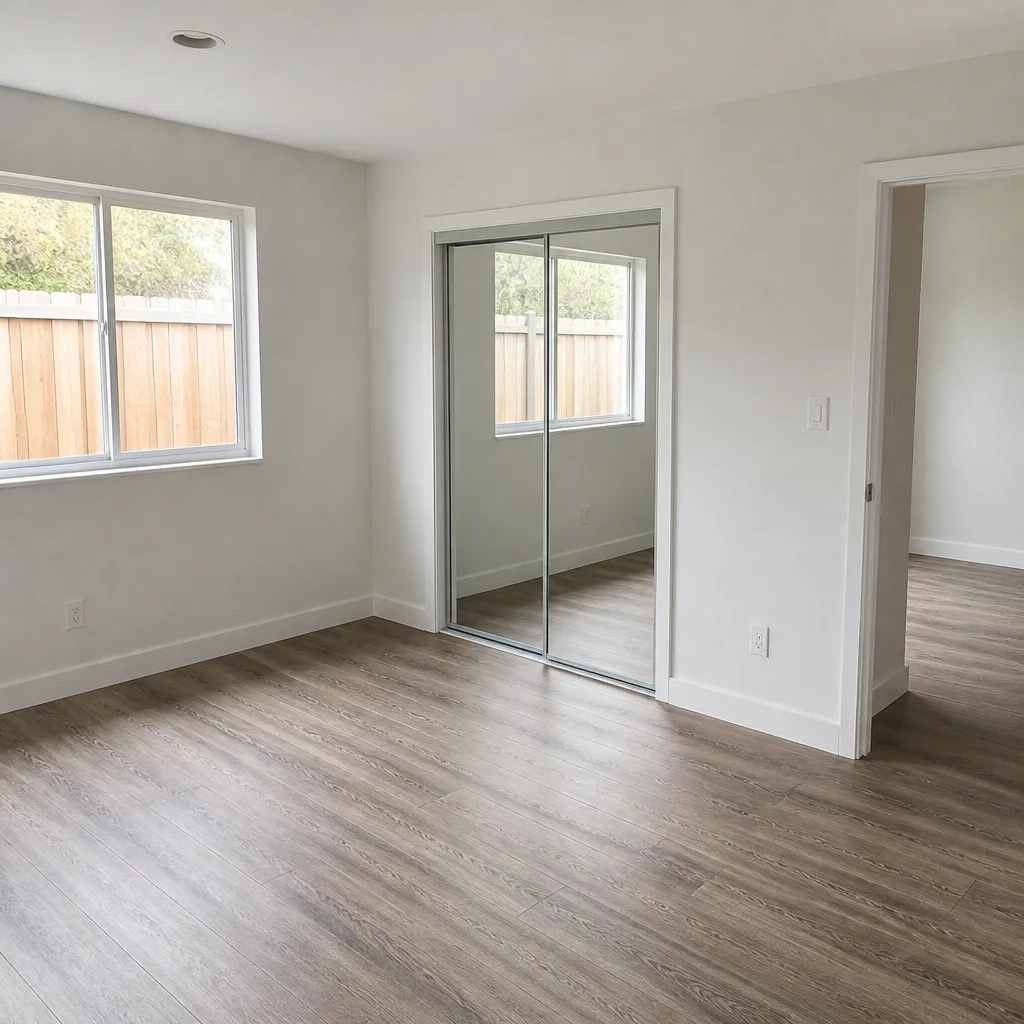 After
After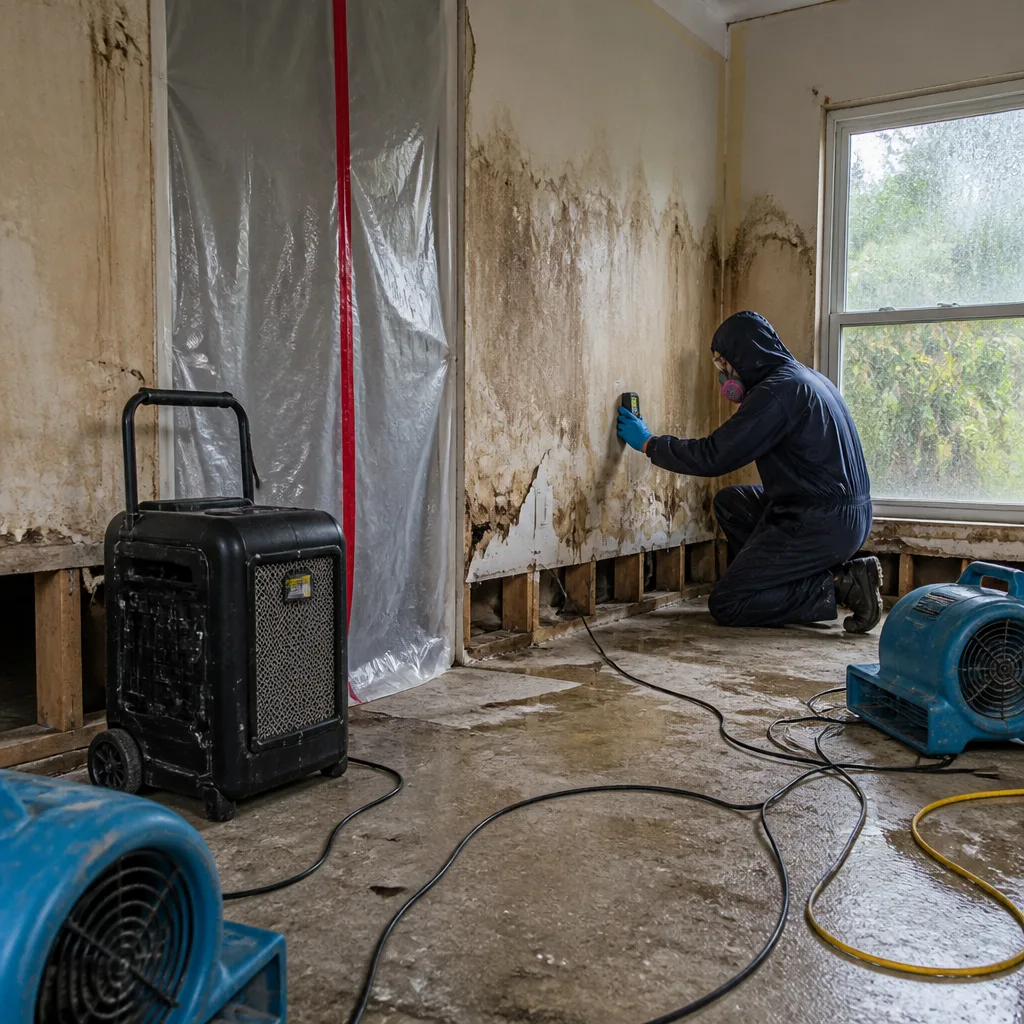 Before
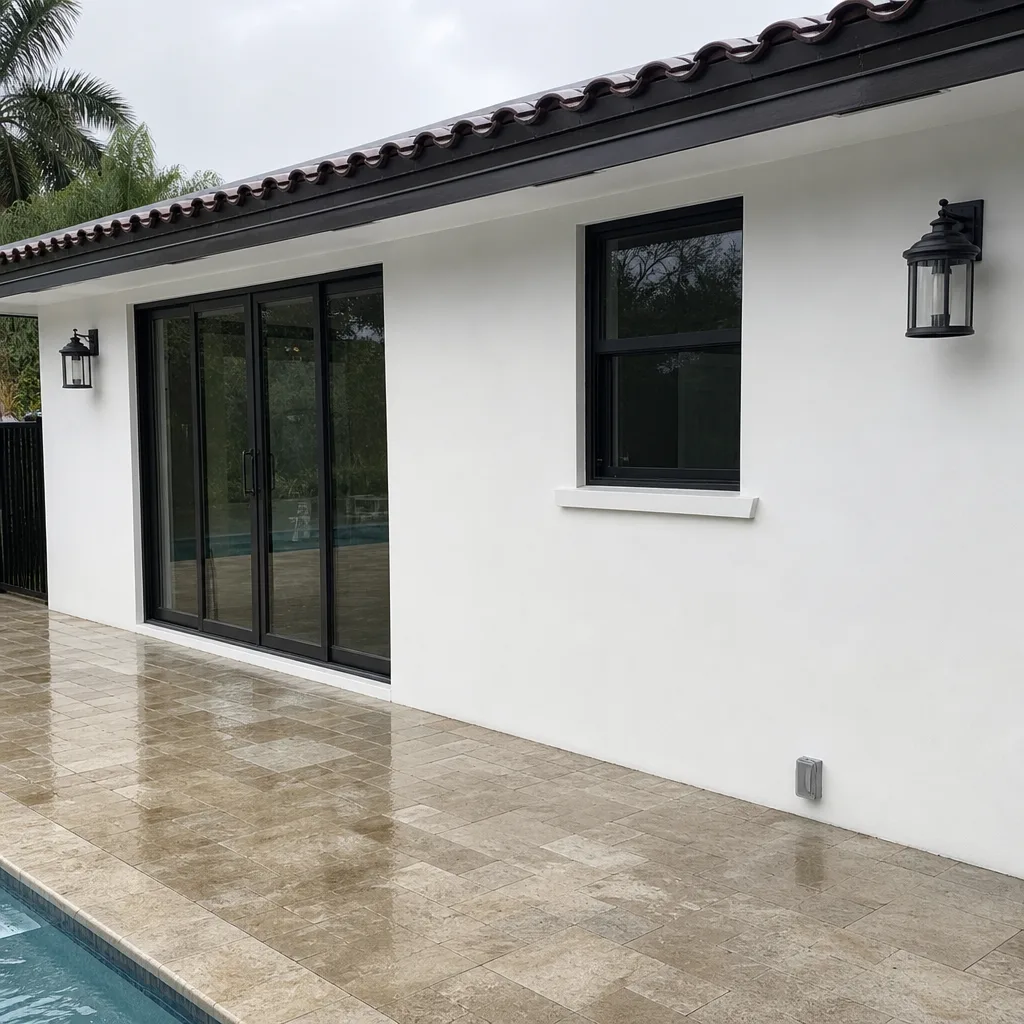 After
After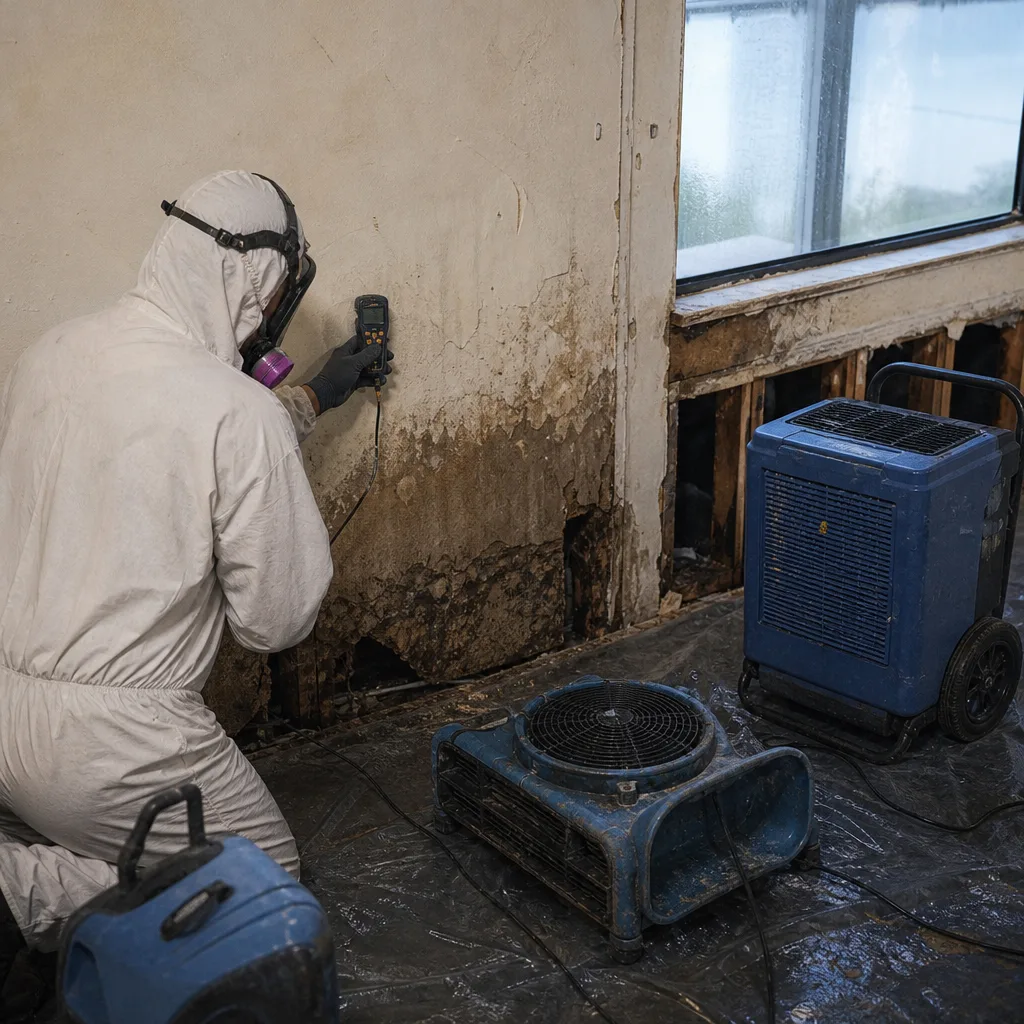 Before
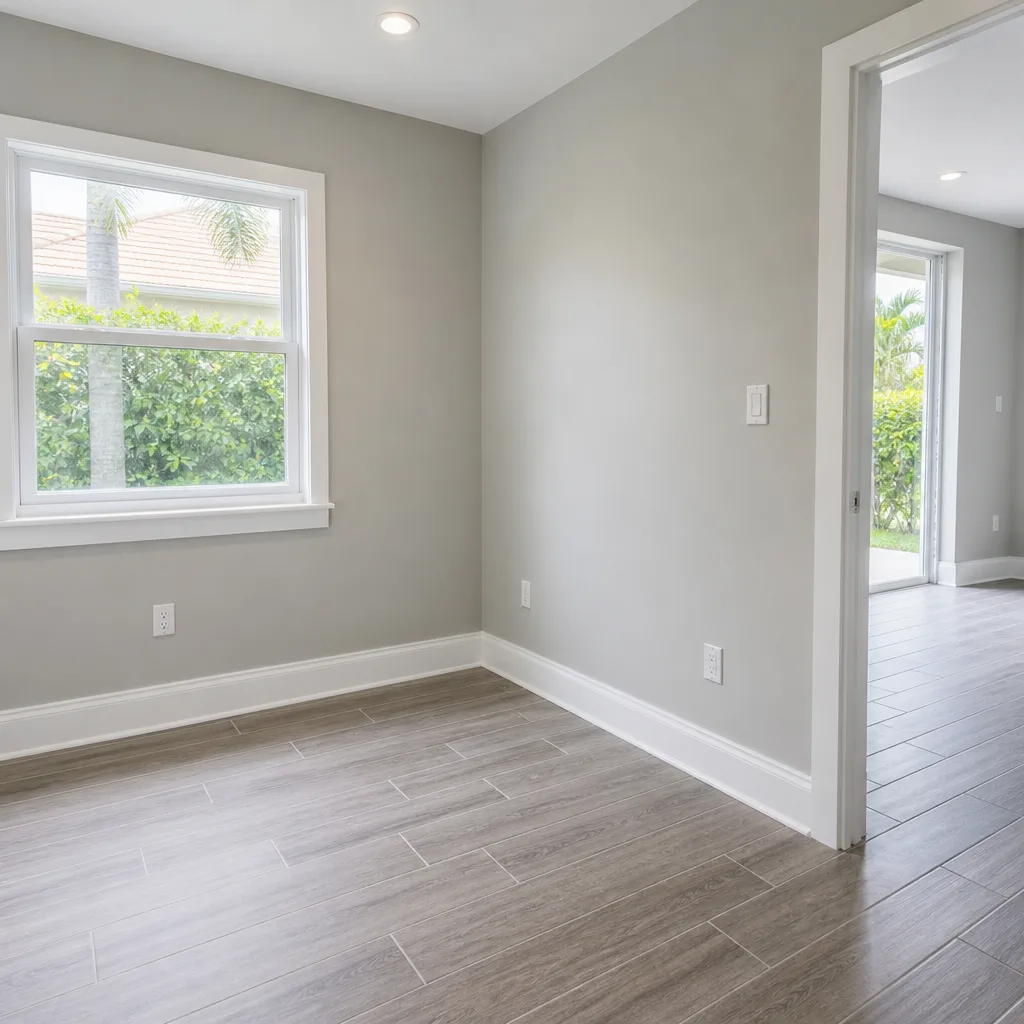 After
After