
Last updated October 16, 2026
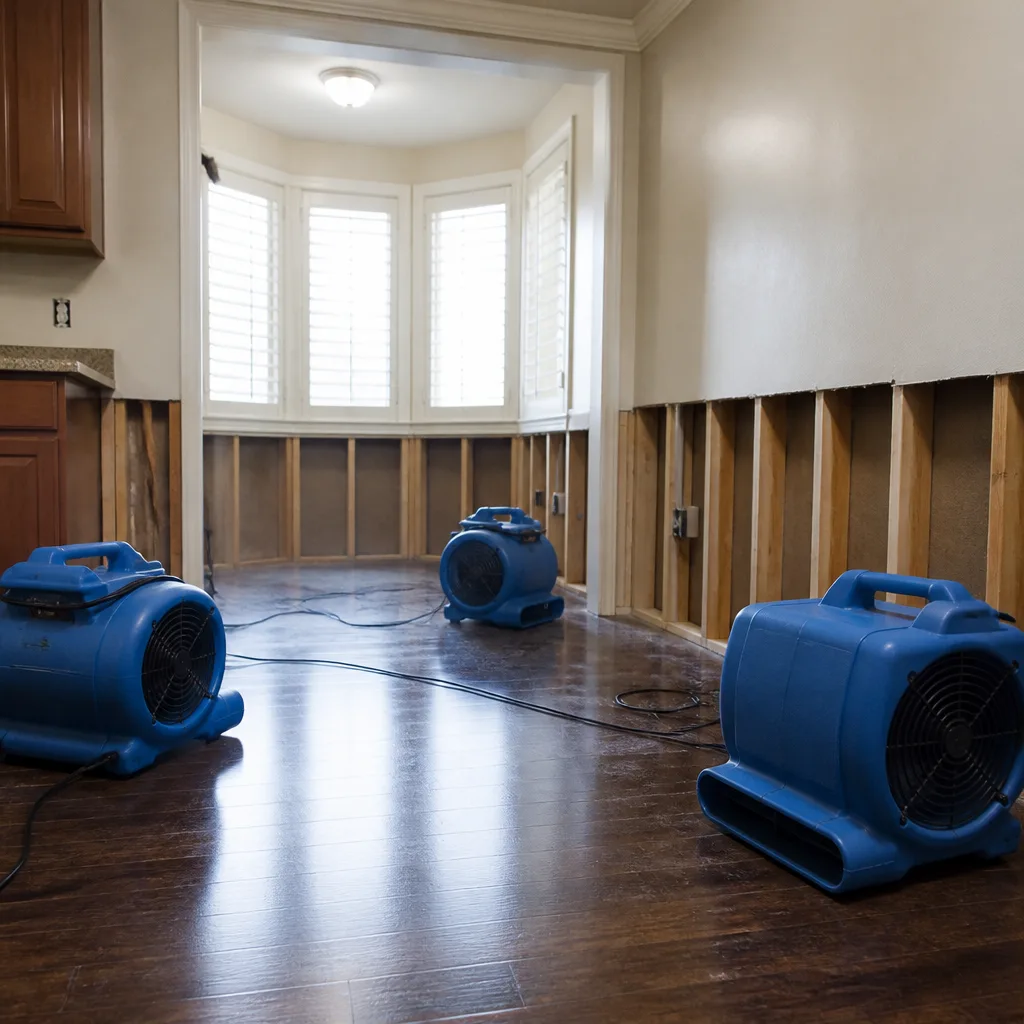 Water damage drying
 Fire & smoke cleanup
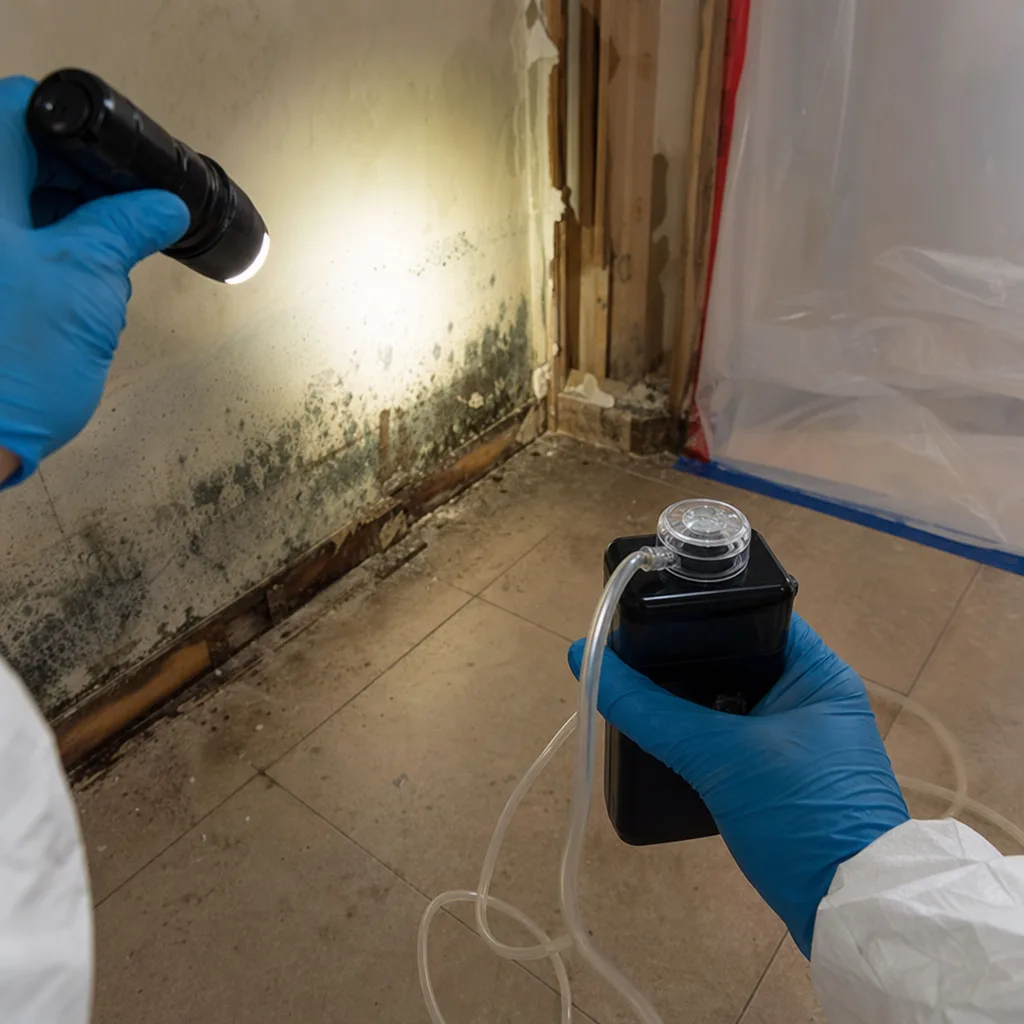
 Mold remediation
 Storm response
 Sewage cleanup
 Reconstruction
Free visual inspection and a written scope of work before any mitigation begins - photos, moisture readings, and drying logs go in your claim file
The scope we write is the scope we bill. Anything new gets shown to you, in writing, before we touch it.
Get your free estimateHow to Hire a Damage Restoration Contractor in Fort Lauderdale: A Step-by-Step Guide
Here’s a number that should stop you cold: after Hurricane Ian, Florida’s Department of Financial Services logged more than 50,000 insurance fraud complaints, and the majority traced back to unlicensed restoration contractors who had homeowners sign over their insurance rights at the front door before a single wall was opened. That’s the reality of our market here in Fort Lauderdale, where every major storm triggers a wave of out-of-state crews flooding in with laminated badges and blank contracts. This guide lays out exactly how to vet a damage restoration contractor in Fort Lauderdale so you’re not making a $15,000 decision at 11 p.m. with water climbing your baseboards. For a broader overview, see our Complete Guide to Damage Restoration in Fort Lauderdale.
Quick Answer
To hire a damage restoration contractor in Fort Lauderdale, start by verifying the Florida DBPR license and certificate of liability insurance before anyone steps inside, then require a written scope with line-item pricing before any tool is touched. A legitimate contractor will put a drying plan, equipment list, moisture classifications, and a workmanship guarantee in writing. In Fort Lauderdale, water damage restoration typically runs $3.50 to $7.50 per square foot for full dry-out, while mold remediation ranges from $1,800 to $6,800 depending on square footage, and fire damage restoration starts around $4,500 for smoke cleanup and climbs from there. For maintenance tips that help avoid costly emergencies, see our Water Damage Restoration Maintenance Checklist for Fort Lauderdale Homeowners.
Restoration work we handle
Table of Contents
- Step 1: Verify the License Before Anyone Touches Your Door
- Step 2: Demand Three Documents at First Contact
- Step 3: Recognize the Red-Flag Script
- Step 4: Understand What a Real Written Estimate Includes
- Step 5: Compare Bids That Look Nothing Alike
- Step 6: Understand the Equipment Differential
- Step 7: Get the Guarantee in Writing
- How Insurance Assignment Works (and When to Say No)
Step 1: Verify the License Before Anyone Touches Your Door
Florida regulates restoration contractors through the Department of Business and Professional Regulation, and verifying a license takes less than two minutes on myfloridalicense.com. Enter the company name or license number, and you’ll see the status, any complaints, and whether the license is active or expired. We’ve seen homeowners in Victoria Park and Coral Ridge hand over deposits to crews whose license had lapsed six months earlier, and there’s rarely any legal recourse when that happens.
One distinction most people miss: the difference between a certified and a registered contractor in Florida. A certified contractor passed the state exam and can work anywhere in Florida, which means more accountability to DBPR. A registered contractor only holds a local license in one jurisdiction, a real restriction in Broward County where Fort Lauderdale sits. For damage restoration involving structural drying, mold remediation, or water extraction, the restoration work itself typically falls under a general contractor, mold remediator, or mold assessor license depending on scope. If a contractor tells you “we don’t need a license for drying,” walk away. The water damage restoration process in Fort Lauderdale involves enough moisture mapping and equipment strategy that unlicensed operators routinely leave walls damp enough to bloom mold in the weeks after they leave.
Here’s what to check in your two-minute verification:
- License status: active, not delinquent or revoked
- License type: general contractor, mold remediator, or mold assessor as the scope requires
- Complaint history: any disciplinary actions filed with DBPR
- Business name match: the name on the license should match the name on the contract
Step 2: Demand Three Documents at First Contact
Before any technician enters your home in Fort Lauderdale, ask for three specific documents. Not “paperwork” in general, these three:
- Florida DBPR contractor license, current and matching the business entity on the estimate.
- Certificate of liability insurance with Broward County limits. Ask for the certificate holder to be changed to your name and address. If they hem and haw about this, you’ve learned something useful.
- A written scope with line-item pricing, not a blank authorization form. The blank form is how the unlicensed rush crews operate; they get a signature first, then the price becomes whatever the “emergency” justifies.
We cannot overstate how different a written scope is from what most Fort Lauderdale homeowners see at 2 a.m. A written scope says “remove drywall to 24 inches in the east wall of bedroom two, install Phoenix air mover, set up containment, estimated three days of drying.” A blank authorization says “do what’s needed to restore property to pre-loss condition,” which is legalese for “the invoice will be whatever we decide it is.”
Step 3: Recognize the Red-Flag Script
Predatory contractors in South Florida have scripts, and after enough of them, the lines become obvious. Here are five phrases that should end the conversation immediately:
1. “We’ll bill your insurance directly so you pay nothing.”
This is the Assignment of Benefits bait. What they’re actually asking you to sign is a document assigning your insurance rights to them, which means they can bill your insurer whatever they want, and if the insurer refuses, they can sue, and guess whose name is on the lawsuit? Yours. The Florida legislature reformed AOB abuse in 2019 precisely because of how badly this played out in Broward County after Hurricane Irma.
2. “We have a crew in your neighborhood right now and can start in an hour.”
The unlicensed storm-chasers travel in packs and use this line to create false urgency. A legitimate Fort Lauderdale restoration company with real equipment and background-checked technicians does not dispatch a full crew without first scoping the job, which takes a site visit and written estimate.
3. “I don’t need to see the inside; I know what water damage looks like.”
No one knows what’s behind a wall without opening it or at minimum scanning it with a moisture meter. If a contractor quotes a price over the phone without inspecting the property, you’re not getting a real estimate, you’re getting a commission pitch.
4. “We’ll need a deposit today to hold your spot.”
Deposits before a written scope are a reliable red flag. Legitimate restoration companies in Fort Lauderdale do not charge deposits on insurance-covered mitigation work; the scope, approval, and billing flow through the claim.
5. “You don’t need to be here; just leave the key under the mat.”
No legitimate contractor wants to work in an empty house with no one to explain where the water came from, which rooms are affected, and what’s salvageable. The only reason to avoid the homeowner is to avoid accountability.
Step 4: Understand What a Real Written Estimate Includes
In our experience, a legitimate written estimate for a Fort Lauderdale water damage job contains four things that most homeowners never request, and those four things are exactly what separates a professional job from a guess. Here’s what to look for when the estimate arrives:
IICRC Moisture Classification
The IICRC (Institute of Inspection, Cleaning and Restoration Certification) classifies water damage into four classes based on how much of the affected area is saturated and how much water is absorbed by materials. Class 1 is a small corner of one room (under 5% of the space affected), while Class 4 is a deeply saturated scenario where water has penetrated hardwoods, concrete, and brick. A real estimate names the class. It tells you the contractor actually assessed the job rather than eyeballing it.
Equipment List with Brand Names
Ask for the list of machines they’ll place in your home. If the estimate doesn’t say what units are going down, you don’t know if you’re paying for professional-grade drying or a glorified fan. Look for names like Phoenix, XPOWER, and Injectidry on the equipment schedule. These are the same systems used by commercial restoration crews for a reason: they move air and remove moisture orders of magnitude more efficiently than rental units from a big-box store. A home in Rio Vista we dried earlier this year had a Phoenix air mover running at 3,200 CFM on the main floor while an Injectidry system pulled water from the hardwood in short, controlled bursts. That level of specification matters.
Drying Timeline
Professional drying is not open-ended. IICRC standards call for a dry goal, typically 3-5 days for standard water losses, based on the moisture class and the materials affected. The estimate should state how many days the equipment stays and what moisture readings the tech is targeting. In Fort Lauderdale’s humidity, where ambient RH routinely sits above 70%, a professional contractor will also run dehumidification continuously, often with a B-Air unit rated for saturated environments, because our moisture conditions make drying harder, not easier. For year-round preparation strategies, read our Seasonal Damage Restoration Care for Fort Lauderdale: Year-Round Homeowner’s Guide.
Workmanship Guarantee
The estimate should include a guarantee in plain language. At Dryden, every job carries a 365-Day Done Right Promise: if the repair fails within a year, we come back and make it right at no charge. That promise is written on the estimate, not spoken aloud and forgotten. When you’re comparing bids, check whether the guarantee is documented or merely implied. A verbal guarantee in this trade might as well not exist.
Step 5: Compare Bids That Look Nothing Alike
Here’s a scenario that plays out in Fort Lauderdale weekly: one company quotes $4,200 and another quotes $11,800 for what looks like the same water damage job. The homeowner assumes the lower bid is the honest one and the higher bid is a racket. But here’s the thing: those two bids are almost never the same job.
The $4,200 bid is typically what we call a “pick-up dry” – remove standing water, place a few fans, leave. No moisture mapping, no containment, no drywall removal, no documentation for the insurance claim, and no guarantee. The $11,800 bid is typically a full mitigation: extraction, containment, removal of saturated drywall and baseboards, professional drying equipment monitored daily, moisture logs for the adjuster, and a written guarantee.
Here’s how to compare bids apples-to-apples:
- Ask both contractors to itemize their scope against the IICRC moisture classification. If one says Class 1 and the other says Class 3, one of them didn’t look.
- Compare equipment counts. A four-room water loss in Fort Lauderdale typically requires 5-8 air movers, 1-2 dehumidifiers, and possibly an Injectidry wood floor drying system. If one bid has two air movers and the other has seven, they’re not the same job.
- Check the square footage of drywall removal. If one bid removes 24 linear feet of baseboard and the other removes 80 feet plus drywall to 24 inches, the first bid is setting you up for mold in the wall cavity.
- Look for line items: “monitor and log moisture daily” vs. “place equipment.” Daily monitoring, with logged readings, is a professional standard. Equipment placement alone is a DIY job with better marketing.
The most expensive line item in Fort Lauderdale restoration is usually not the equipment or labor; it’s the removal and replacement of materials. Drywall replacement in Broward County runs around $2.50 to $4.50 per square foot for standard finishes, and that’s on top of the mitigation line. When a bid looks cheap, it’s because that bid has skipped the removal line entirely, and you’ll pay for the mold remediation later. Speaking of which, mold remediation in Fort Lauderdale routinely costs thousands more than the water damage would have cost to fix properly the first time.
Step 6: Understand the Equipment Differential
Not all drying equipment is equal, and Fort Lauderdale’s climate makes the difference more consequential here than in most places. The city sits in a subtropical zone where ambient relative humidity rarely drops below 65%, even in dry-season months. That means drying a water-damaged structure in Fort Lauderdale is fundamentally different from drying one in Phoenix or Denver. The equipment has to work against constant moisture intrusion from the air itself.
Professional restoration companies run commercial-grade dehumidifiers that pull 130 to 150 pints of water per day from the air. The rental units from home improvement stores pull 30 to 50 pints, and they overheat in continuous operation. If you’ve ever visited a Fort Lauderdale home ten days after a water event and found the drywall still damp and the homeowner still running a rental fan, you’ve seen the equipment gap in action.
The brands to look for on an equipment schedule include Phoenix dehumidifiers, XPOWER air movers, B-Air high-capacity drying units, and Injectidry systems for hardwood floors. These are not interchangeable with consumer products. A Phoenix LGR (low-grain refrigerant) dehumidifier runs around 150 pints per day at AHAM conditions and handles Fort Lauderdale’s humidity without cycling off. That’s what professional drying looks like.
Step 7: Get the Guarantee in Writing
At the risk of sounding like a broken record, the guarantee matters more in this trade than in almost any other home service. That’s because restoration failures are often invisible at first. A drywall patch that looks fine in March may crack in June when the humidity shifts. A wood floor that looks dry in December may cup and buckle by April. You need a guarantee that extends long enough to catch those failures.
That’s why Dryden Restoration Fort Lauderdale writes the 365-Day Done Right Promise into every estimate and every contract. It covers workmanship on the repair we complete. If the patch fails, if the floor buckles, if the paint peels at the seam, if anything we fixed comes undone within the year, we come back and make it right at no charge. No documentation required beyond the original contract, no “we’ll see what we can do.” The Kingswell Way is built on saying the price before the work, showing up in the window we gave, leaving the place cleaner than we found it, putting the guarantee in writing, and coming back if it fails.
When you’re vetting contractors in Fort Lauderdale, ask directly: “Do you offer a written workmanship guarantee, and what does it cover?” If the answer is vague, you know the deal.
How Insurance Assignment Works (and When to Say No)
Insurance claim handling is where the most serious mistakes happen in Fort Lauderdale restoration, and the Assignment of Benefits scam is the big one. Here’s how it works: a contractor shows up, does a quick walkthrough, and says they need you to sign an AOB to “speed up the claim.” What you’ve actually signed is a legal document assigning your insurance benefits to the contractor, which means the contractor now deals directly with the insurance company, bills whatever they decide is fair, and if the insurer pushes back, that contractor can file a lawsuit in your name.
You lose all control the moment you sign. The contractor can delay the work, inflate the invoice, and if the insurance company refuses to pay the full amount, the contractor can place a lien on your property for the difference. The Florida Legislature’s 2019 AOB reform (SB 122) restricted some of the worst abuses, but the practice still exists in Broward County.
A better approach, and what we recommend to every homeowner in Fort Lauderdale:
- Contact your insurance company first, same day if possible. The sooner the claim is filed, the sooner the adjuster gets scheduled.
- Document the damage with photos and video before anything is moved or removed.
- Mitigate further damage (shut off water, cover roof openings) without signing any assignment of benefits.
- Get a written scope from a licensed contractor, then let your insurer approve the scope before mitigation begins.
- Never sign an AOB unless you’ve had an attorney review it. The pressure to sign at the door is itself a red flag.
When we work with insurance claims, we document everything: photos of every affected surface, moisture readings before and after, equipment placement logs, and daily drying progress reports. We send those directly to your adjuster. We don’t ask you to assign your benefits to us, and we don’t need to. A restoration contractor who does good work and documents it thoroughly can work within the normal claims process without any of that AOB leverage.
For fire damage restoration in Fort Lauderdale, the documentation needs go even deeper: smoke and soot mapping, content inventory, deodorization logs, and structural assessment for the rebuild. The same holds for water, mold, and fire; the paperwork is part of the work.
Common Mistakes to Avoid
- Hiring before verifying the license. The myfloridalicense.com check takes two minutes, and unlicensed contractors account for a disproportionate share of complaints filed with DBPR every year in Broward County.
- Signing an Assignment of Benefits under pressure. The “we’ll handle everything” pitch sounds convenient at 2 a.m., but it hands all control to someone who has no incentive to keep the invoice reasonable.
- Accepting an estimate without an equipment list. Two air movers in a four-room flood is not mitigation, it’s a suggestion.
- Choosing a contractor without a written guarantee. Restoration failures often show up months later, and a verbal guarantee doesn’t survive the winter.
- Treating the lowest bid as the honest bid. In Fort Lauderdale, low bids usually mean skipped scope, not efficiency. The $4,200 quote that omits drywall removal will cost you $8,000 in mold remediation later.
- Waiting to call. In Fort Lauderdale’s humidity, mold can begin colonizing damp drywall in 48 to 72 hours. Every day of delay expands the scope and the invoice.
See the difference
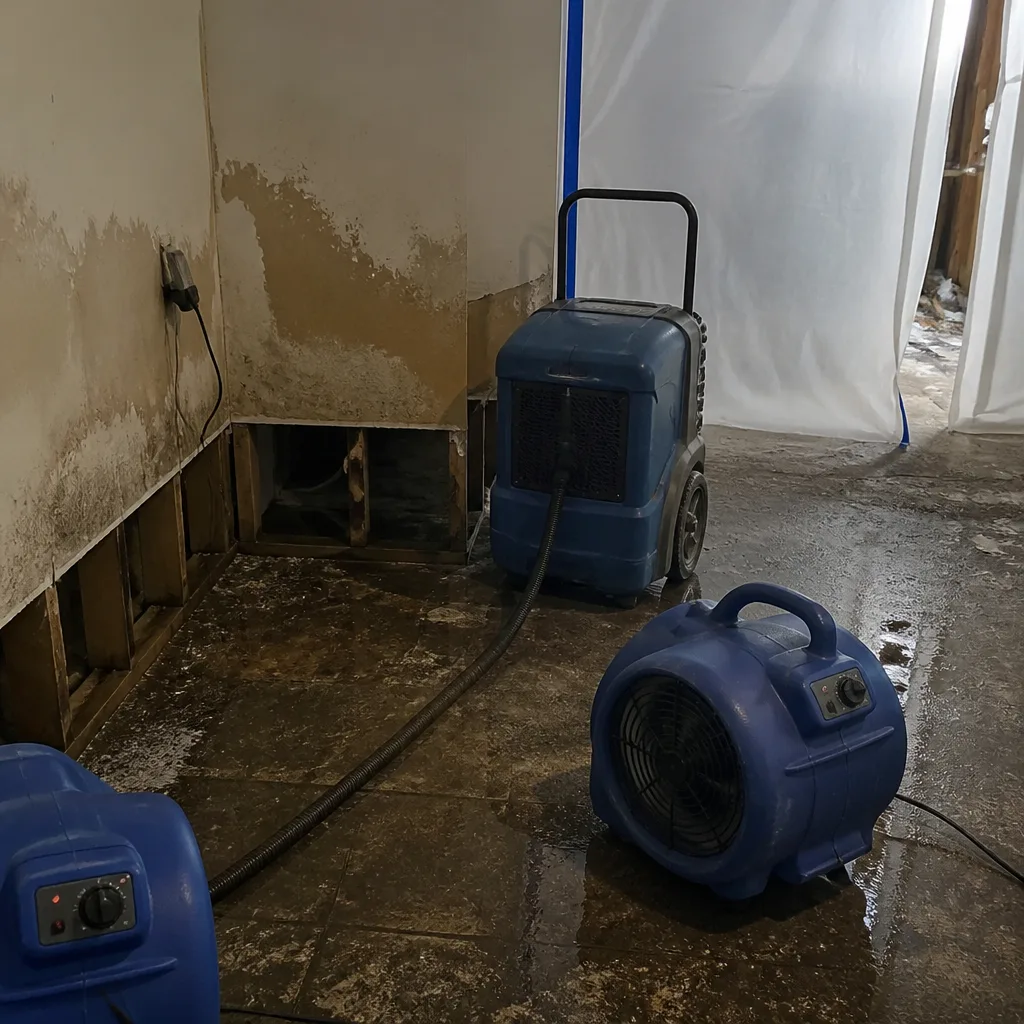 Before
 After
After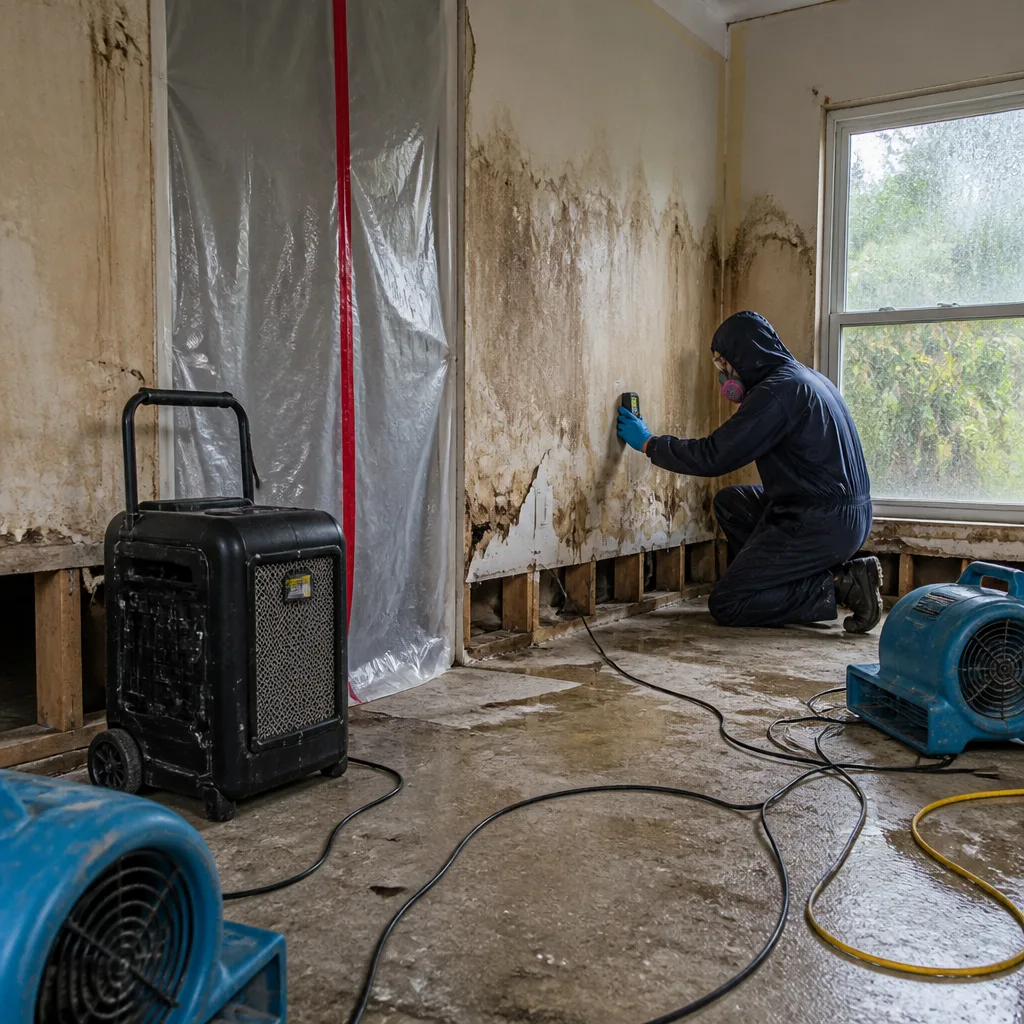 Before
 After
After Before
 After
AfterWhen to Call a Professional
Call a professional mitigation company the moment you notice water that extends beyond what a mop can handle, a persistent musty odor that doesn’t clear with ventilation, or any smoke damage from a fire, however small the fire seemed at the time. Small fires in kitchens and laundry rooms often leave soot deposits inside walls and ductwork that become a respiratory irritant for months. For water, the threshold is lower than most homeowners think: if water has touched drywall, baseboards, or flooring in a Fort Lauderdale home, you need professional-level moisture assessment because the ambient humidity will keep that moisture in place longer than you expect. Dryden Restoration Fort Lauderdale offers free estimates in Fort Lauderdale and the surrounding Broward County communities. Call (754) 354-1250 and a live person answers, 24 hours a day.
Frequently Asked Questions
Water damage restoration in Fort Lauderdale typically costs between $3.50 and $7.50 per square foot for full mitigation, which means a 1,500-square-foot home with water in two rooms commonly runs $4,000 to $9,000 total, depending on the IICRC moisture classification and how much drywall and flooring requires removal. The range is broad because a Class 1 spill with no material removal is fundamentally different from a Class 4 saturation that opens walls and pulls flooring. Call (754) 354-1250 for an exact quote, estimates are free.
A reputable Fort Lauderdale restoration company can typically have a technician on site within a few hours of your call, and Dryden Restoration Fort Lauderdale maintains 24-hour live phone dispatch, so someone answers at 3 a.m. no matter what. The first visit includes an inspection, moisture readings, and a written scope. Speed matters because mold colonization can begin within 48 to 72 hours in Fort Lauderdale’s climate.
Most Fort Lauderdale homeowner policies cover sudden and accidental water damage, such as a burst pipe or washing machine overflow, but exclude gradual leaks and flood damage (flood requires a separate NFIP policy). When we handle an insurance-covered claim, we document everything with photos, moisture logs, and daily drying reports, and we coordinate directly with your adjuster.
A certified contractor has passed the state-level exam and can work anywhere in Florida, while a registered contractor holds only a local license and can work only in the jurisdiction that issued it. In Broward County, many out-of-town storm chasers hold a registration in another county and claim it covers Fort Lauderdale, which it does not. Always verify the license on myfloridalicense.com and confirm the license type matches the scope of work.
Mold growth on non-porous surfaces like tile or glass can often be cleaned with detergent and thorough drying, but mold that has penetrated drywall, carpet, insulation, or wood requires professional remediation because the colony extends into the material itself and surface cleaning leaves the roots intact. In Fort Lauderdale homes, we also check behind the visible growth, because ambient humidity allows hidden colonies to thrive inside wall cavities. When in doubt, have a mold assessor test first. Call (754) 354-1250 and we’ll walk you through what a proper assessment includes.
You should deal with your adjuster, with the restoration contractor providing documentation and supporting evidence. When we handle a claim, we send moisture logs, equipment schedules, photos, and the written scope directly to the adjuster, and we’re available for calls to answer questions, but the claim remains yours. We never ask you to sign over your insurance rights.
The Bottom Line
Hiring a damage restoration contractor in Fort Lauderdale doesn’t have to be a gamble, even when water is pooling on the floor at midnight. The same basic checks apply whether you have days or minutes: verify the license, demand a written scope before anything is touched, look for the equipment list and the moisture classification on the estimate, compare bids by the line items rather than the bottom line, and never sign anything that assigns your insurance rights. Do that, and you’ll join the minority of Fort Lauderdale homeowners who come through a restoration with a dry house, a settled claim, and a contractor who actually meant what they said. At Dryden Restoration Fort Lauderdale, we’re independently owned and operated as part of the Kingswell family of restoration businesses, and we’ve been serving Fort Lauderdale since 2005. For a free estimate, call (754) 354-1250. A live person answers, and the first visit costs you nothing.
Written by Carl Brandt, Owner at Dryden Restoration Fort Lauderdale, serving Fort Lauderdale since 2005.