
Last updated October 16, 2026
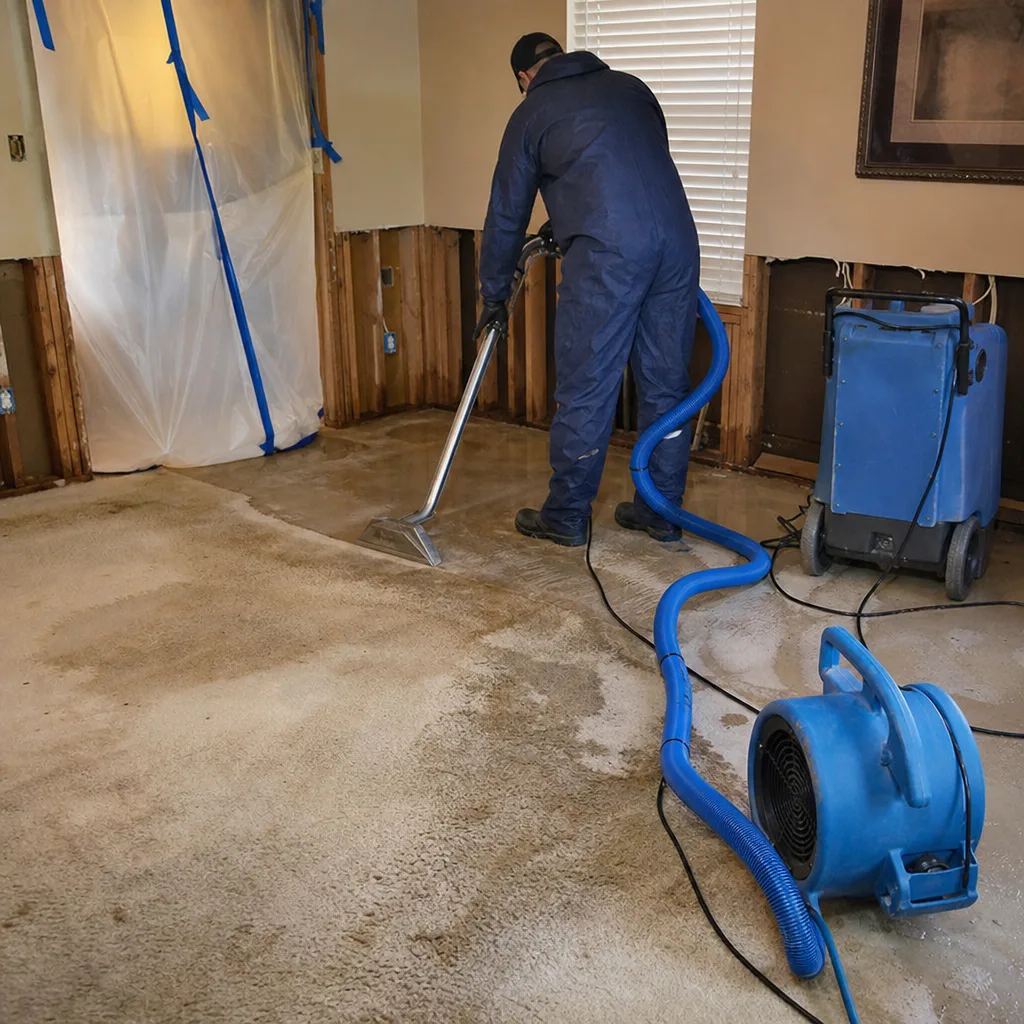
 Water damage drying
 Fire & smoke cleanup
 Mold remediation
 Storm response
 Sewage cleanup
 Reconstruction
Free visual inspection and a written scope of work before any mitigation begins - photos, moisture readings, and drying logs go in your claim file
The scope we write is the scope we bill. Anything new gets shown to you, in writing, before we touch it.
Get your free estimateDIY vs Professional Damage Restoration: The Fort Lauderdale Homeowner’s Decision Guide
In Fort Lauderdale’s average summer humidity, mold can establish a colony on wet drywall in 48 to 72 hours. That single fact changes the entire DIY-versus-professional calculation. A dry-out that takes four days instead of two isn’t just slower, it’s a completely different problem with a different price tag. This guide walks through exactly where the line is between what a capable homeowner can handle and what needs professional restoration, using real Fort Lauderdale conditions, real dollar figures, and the insurance realities most guides skip.
Quick Answer
Most water damage in Fort Lauderdale requires professional restoration, not because homeowners lack skill but because the city’s humidity compresses the safe DIY window to roughly 24 to 48 hours for anything beyond a small, clean-water drip. A homeowner can safely handle surface condensation and minor supply-line drips caught immediately with towels, fans, and a dehumidifier. Anything involving Category 2 or 3 water, water that sat for more than 48 hours, water behind walls, or water touching drywall in humid months should trigger a call to a professional restoration company before mold becomes the second problem.
Restoration work we handle
Table of Contents
- The Fort Lauderdale Humidity Problem: Why DIY Gets Harder Here
- The Decision Tree: Which Jobs You Can Handle, Which You Can’t
- Understanding Water Categories: Category 1, 2, and 3 in Plain English
- The Insurance Consequence Most Homeowners Never Hear About
- The Real Cost Comparison: DIY vs Professional Restoration
- What to Document If You Do Any DIY Work First
- What Professionals Actually Do That Rental Equipment Can’t
- When the Answer Is Always Professional
The Fort Lauderdale Humidity Problem: Why DIY Gets Harder Here
Fort Lauderdale sits in a subtropical climate zone where relative humidity, the amount of moisture the air holds compared to what it could hold, runs between 70 and 85 percent most of the year. That matters for restoration because drying doesn’t stop when the standing water is gone. Drying stops when building materials reach what the restoration industry calls their dry standard, the moisture content they should hold under normal conditions. In a dry climate, a wet wall may air-dry to that standard in three or four days with open windows and box fans. In Fort Lauderdale’s August air, the same wall can take two weeks or simply never fully dry, because the air itself is already heavy with moisture.
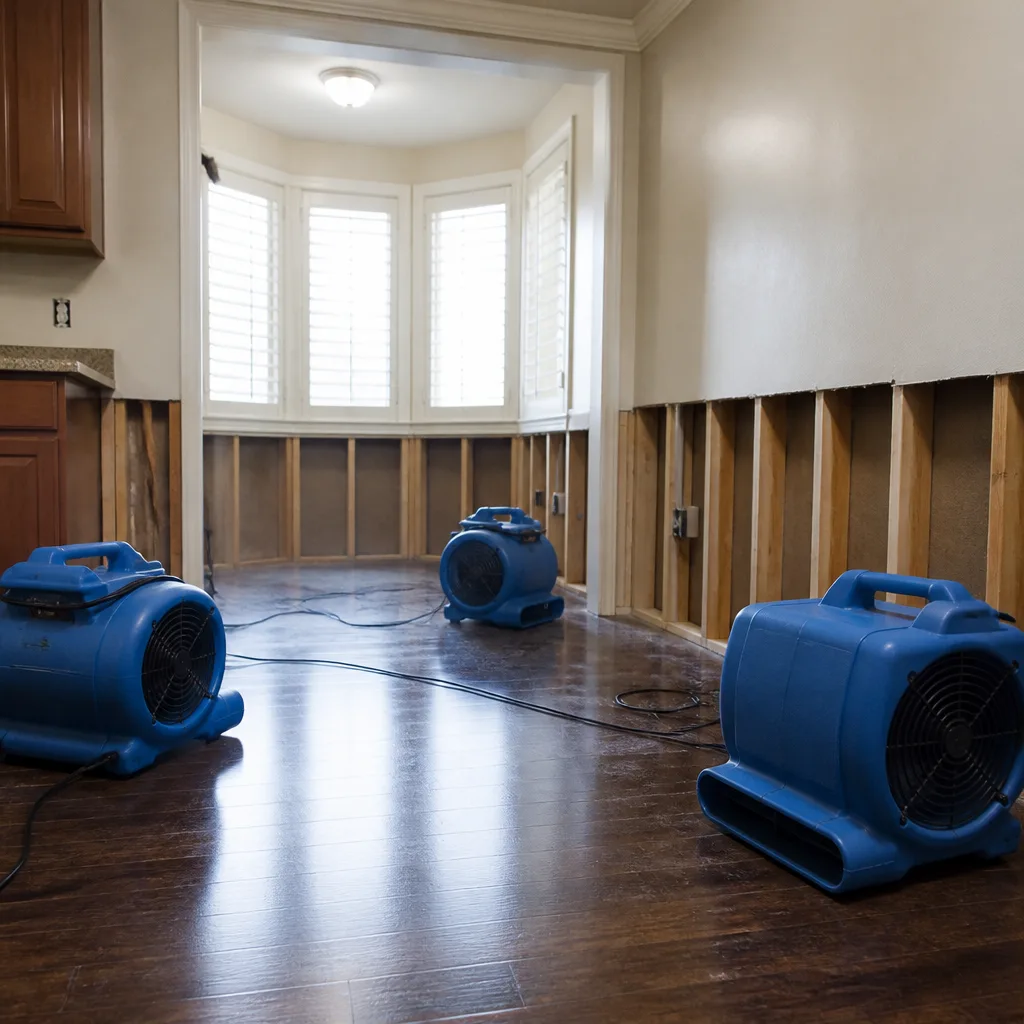
This is why restoration professionals use psychrometric drying, a science that measures air temperature, humidity, and moisture content in materials to calculate precisely how much drying power a space needs. It’s not a buzzword. It’s the difference between running a fan and running the right number of air movers and dehumidifiers sized to the actual water load. Rental equipment from a home improvement store usually includes one dehumidifier and one or two fans. A professional drying plan for even a modest Fort Lauderdale water event, like a washing machine supply line that ran for an hour, typically requires three to six air movers and at least one large-capacity low-grain refrigerant dehumidifier, the kind rated to keep pulling moisture out of already-humid air. Consumer-grade units struggle in exactly the conditions Fort Lauderdale produces year-round.
Mold adds urgency in a way no other factor does. Once drywall, baseboard, or insulation stays wet past the 48-hour mark in warm, humid air, mold spores, which are present in every Fort Lauderdale home, begin to colonize. What starts as a dry-out becomes a Mold Remediation in Fort Lauderdale project, and that’s a different scope of work with different protocols, containment requirements, and costs. The DIY window isn’t a question of effort. It’s a question of whether you can dry the space before biology takes over.
The Decision Tree: Which Jobs You Can Handle, Which You Can’t
Most guides frame this as a values question: are you the kind of person who gets your hands dirty? It isn’t. It’s a technical question about water source, water volume, and time. Here’s the working framework we use, explained the way we’d explain it to a neighbor standing in a wet hallway at 2 a.m.
Jobs a capable Fort Lauderdale homeowner can usually handle
- Surface condensation on windows, pipes, or toilet tanks. This is moisture from humid indoor air meeting a cool surface. Wipe it dry, run a small dehumidifier if you have one, and fix the root cause, which is usually a bathroom fan that isn’t venting or an AC register pointed at a cold pipe. No wall or floor materials are saturated.
- A single-fixture supply line drip caught immediately. If you see water pooling under a sink the moment it starts and the water has not touched drywall, baseboard, or flooring beyond tile, shut off the fixture’s angle stop, soak up the water, and run a fan on the area for a day. Check the cabinet interior with a moisture meter if you own one. If readings stay below 15 percent wood moisture equivalent, you’re done.
- An exterior hose bib drip on a concrete patio or driveway. Water running onto non-porous outdoor concrete evaporates without creating a mold condition inside the home. Fix or replace the bib, and there’s no restoration issue.
- A small, contained appliance leak on tile flooring with no cabinetry involvement. If a dishwasher leaked onto a tile floor and you caught it within minutes, the water didn’t reach walls or cabinets, and the tile is in good condition with intact grout, thorough mopping and fan drying is a reasonable DIY response. Watch for any grout lines that stay dark after drying, which signals water got beneath the tile.
Jobs that require professional intervention the moment you touch them
- Any water that touched drywall, baseboard, or laminate flooring. These materials wick water upward and sideways. You cannot dry what you cannot see, and what you cannot see is the interior wall cavity and the subfloor.
- Any water from a toilet overflow, washing machine drain backup, dishwasher waste line, or sink drain. This is Category 2 or 3 water, which carries contaminants. More on categories below.
- Any water that sat for more than 24 to 48 hours before discovery. If you came home from a weekend away to a wet floor, the clock already ran out on DIY. Mold is not a theory at that point in Fort Lauderdale; it’s a probability.
- Water from a roof leak that has been active through multiple rainstorms. Fort Lauderdale’s summer rains are daily events. A roof leak that has been wetting insulation and ceiling drywall for a week is a mold job and a structural drying job, not a mop-and-fan situation.
- Any water event covering more than about 15 square feet of flooring. The volume of water held in carpet padding, subfloor, and wall cavities beyond that size exceeds what a homeowner with two fans and a rented dehumidifier can dry fast enough to beat mold in humid air.
- Any fire-related water damage. The water from fire suppression carries soot, char, and fire retardants. It’s a chemistry problem as much as a water problem, and it belongs in the hands of a Fire Damage Restoration in Fort Lauderdale crew.
Understanding Water Categories: Category 1, 2, and 3 in Plain English
Restoration professionals classify water damage by contamination level, defined by the IICRC, the Institute of Inspection, Cleaning, and Restoration Certification, which sets the industry standards for water damage work. Knowing these categories helps a homeowner understand why a puddle from a supply line and a puddle from a drain backup are entirely different problems.
Category 1 is clean water. It comes from a supply line, a faucet, a water heater tank that hasn’t been sitting, or rainwater that entered through an open window. It’s water you could theoretically drink from its source. Category 1 water becomes contaminated over time as it sits, picks up what it touches, and warms to room temperature. In Fort Lauderdale’s heat, that transition happens faster than in most of the country, often inside 48 hours.
Category 2 is gray water. This water carries significant contamination: soap from a washing machine overflow, food particles from a dishwasher leak, or water that has been sitting long enough to grow bacteria. Gray water causes illness if ingested and requires sanitizing, not just drying, for anything porous it touched.
Category 3 is black water. This is water containing pathogens, sewage, or floodwater from outside. A toilet overflow with feces, a sewer backup, or storm surge from a Fort Lauderdale hurricane all produce Category 3 water. Anything porous that absorbs Category 3 water is typically removed and discarded, not dried, and the remaining structural materials require professional sanitization.
Here’s the part most homeowners miss: Category 1 water does not stay Category 1. A supply-line leak into a carpeted closet becomes Category 2 as it sits and absorbs the dirt, dust, and skin cells that live in every carpet. Give it another day in Fort Lauderdale’s heat, and biology is actively multiplying in it. The IICRC categories exist to tell restorers what they’re dealing with, but the timeline, the water’s path, and the local climate determine what it becomes. In Fort Lauderdale, the safe assumption is that any water you did not personally watch appear and immediately begin extracting is at least Category 2 by the time you’re dealing with it.
The Insurance Consequence Most Homeowners Never Hear About
Florida homeowners insurance operates under its own set of realities, and Fort Lauderdale residents know the premiums reflect it. Here’s the consequence that catches people off guard: a DIY restoration attempt that does not reach IICRC drying standards can void a claim if the insurer’s adjuster finds evidence of incomplete mitigation.
Here’s how it plays out. A homeowner files a water damage claim. The adjuster arrives and asks what was done immediately after the water was discovered. If the answer is “we rented a dehumidifier and ran fans for three days,” the adjuster is now looking at a job with no moisture map, no drying logs, no equipment sizing calculation, and no confirmation that building materials ever reached their dry standard. In many cases, the adjuster’s next question is whether the current damage, including any mold that has developed, is a result of the original event or a result of inadequate mitigation after the event. Policies cover the original event. They frequently exclude damage caused by the homeowner’s failure to mitigate promptly and properly. An incomplete DIY dry-out can create exactly that exclusion.
The reverse is also true, and it’s worth understanding. Insurance adjusters work with professional restoration documentation every day. A professional job produces a scope of work, a drying plan, daily moisture readings, and a final sign-off showing the structure reached dry standard. That documentation tells the adjuster the mitigation was complete, which protects the rest of the claim. We’ve been on jobs where a homeowner’s quick action with towels and a shop vac prevented a much worse outcome, and we’ve been on jobs where three days of consumer-grade drying equipment left walls at 28 percent moisture content in 75 percent humidity, feeding a mold bloom the policy then refused to cover. The first homeowner saved their claim with fast action. The second homeowner lost it by stopping halfway.
If you have insurance, call your carrier early. If you’re doing any DIY work before a professional arrives, document it properly using the steps in the next sections. The goal is to show a claims file that you acted immediately and reasonably, not that you attempted a full restoration with rental equipment and no moisture verification.
The Real Cost Comparison: DIY vs Professional Restoration
Money is the reason most homeowners consider DIY, so let’s look at the actual numbers for the Fort Lauderdale market rather than vague warnings that DIY “costs more in the long run.” Sometimes it does. Sometimes it doesn’t. Here’s an honest accounting.
DIY costs: what you’ll actually spend
- Rental dehumidifier and fan set: $220 to $400 for a weekend, depending on the rental house and unit size
- Moisture meter (a real one, not a $15 garden meter): $40 to $90 to purchase
- Replacement materials (baseboard, drywall patch, primer, paint): $60 to $200 for a small area
- Your time: 6 to 16 hours across setup, monitoring, and cleanup
Total realistic DIY cost for a small, caught-early Category 1 job: $300 to $600 plus the value of a weekend.
Professional costs: what a scoped Category 1 job runs
- Category 1 water extraction and drying, small contained area (under 100 square feet): $1,800 to $2,500
- Category 1 water extraction and drying, multi-room (up to 400 square feet): $2,500 to $3,800
- Category 2 water cleanup with sanitization: $3,000 to $4,500 for typical Fort Lauderdale single-family home scenarios
- Mold remediation on top of incomplete drying: adds $2,000 to $8,000 depending on the colony size and containment requirements
Those professional numbers aren’t pulled from air. They reflect what Fort Lauderdale restoration crews charge for properly scoped work with professional-grade equipment like Dri-Eaz dehumidifiers and Phoenix air movers, the machines that move enough air and pull enough moisture to hit dry standard in 48 to 72 hours even in humid air. Consumer rental units cannot produce those drying rates in Fort Lauderdale’s climate.
Where DIY genuinely saves money: a true Category 1 drip caught within minutes, with no drywall involvement and no flooring beyond tile. In that scenario, a homeowner with a shop vac, fans, and a good moisture meter can do the job for a few hundred dollars, and a professional visit would be overkill. Where DIY multiplies costs: any job requiring drywall removal, any job where water touched adjacent rooms through walls or flooring, and any job where the water sat long enough for mold to start. A $400 DIY attempt that fails to dry a wall cavity becomes a $3,000 professional dry-out plus a $3,000 mold remediation. The $400 didn’t save $2,200. It added a second problem.
What to Document If You Do Any DIY Work First
Most homeowners with water damage call their insurance company first and start moving furniture second. Both are right. What’s often missing is the documentation, and documentation is what protects your claim when you’ve done any DIY work before the pros arrive. Here’s the sequence to follow.
- Photos before anything moves. Shoot wide shots of the entire affected area, then close-ups of the water source, the wet materials, and any visible water line on walls or baseboard. Use your phone’s timestamp, and if your phone doesn’t stamp photos automatically, place a newspaper or a phone screen showing the date in one wide shot.
- Document the water source. If it’s a failed supply line, photograph the fitting that failed before you disconnect it. If it’s a roof leak, photograph the water path on the ceiling. The adjuster needs to connect the damage to the event, and the source photo is the connection.
- Record what you did and when. A simple note is fine: “11:15 p.m. shut off main water. 11:30 p.m. moved furniture out of water path. 12:00 a.m. started shop vac extraction. 1:00 a.m. set two box fans and one rented dehumidifier. Will call restoration company in the morning.” Time-stamped actions demonstrate prompt mitigation, which insurance policies require.
- Take moisture readings if you have a meter. Record them by location and time. A wall that reads 22 percent wood moisture equivalent at 8 a.m. and 24 percent at 2 p.m. despite fans running is objective evidence that the drying plan isn’t working, and that’s exactly the moment to call a professional.
- Keep every receipt. Rental equipment, shop vac purchase, tarps, anything. Whether your policy reimburses or not, the receipts document the effort.
- Call the restoration company with this information in hand. When you call us at (754) 354-1250, the person who answers will ask what happened, when, and what you’ve done so far. Your documentation means the first truck that rolls carries the right equipment for the job already in progress.
None of this documentation work is insurance-law trickery. It’s the same basic record-keeping a professional crew does on every job, and it materially changes how an adjuster reads your file.
What Professionals Actually Do That Rental Equipment Can’t
Rental dehumidifiers and box fans are not miniature versions of professional drying equipment. They’re different tools built for different jobs, and the difference matters most in Fort Lauderdale’s humidity.
A professional drying plan starts with measurement, not machinery. We map the moisture in every affected surface using penetrating and non-penetrating moisture meters, then we measure the temperature and relative humidity in the room and in the wall cavities. Those numbers feed a psychrometric calculation that tells us how many air movers, how many dehumidifiers of what capacity, and where to place each one to create airflow across the wet surfaces. Airflow is the point. A box fan in the middle of a room moves air through the room; professional air movers are positioned to force air across specific wet surfaces in specific patterns, which is what actually evaporates water from drywall and subfloor.
Then there’s the dehumidifier itself. The consumer-grade unit you rent from a home improvement store is typically a refrigerant dehumidifier rated for basements, which means it works best in air that’s already relatively dry. In Fort Lauderdale, where the air enters a room at 75 percent RH, relative humidity, those units struggle to pull moisture below about 50 percent, and they lose efficiency as the air gets humid. Professional restoration-grade dehumidifiers from Dri-Eaz, Phoenix, XPOWER, B-Air, and Injectidry are low-grain refrigerant or desiccant units built to keep pulling moisture from air that’s already saturated, which is the normal operating condition in a flooded room in South Florida. The equipment difference alone often determines whether the structure dries in two days or two weeks.
Professionals also do one thing rental equipment never does: we remove the water we cannot see. Water behind baseboards, under vinyl plank flooring, inside wall cavities, and beneath cabinets doesn’t dry because air doesn’t move through it. We drill small holes, remove baseboards, and in some cases create ventilation channels to get airflow where the water actually is. A homeowner with rental equipment cannot do this work, which means the water stays where it hides, and the mold grows where nobody can see it until the smell gives it away.
When we arrive at a water damage job in Fort Lauderdale, we follow the same sequence every time, and we explain it in plain English as we go: Say the price before the work, with a written scope and a dollar figure before any tool is touched. Show up in the window we gave, because a wet house is a clock, not a convenience. Leave the place cleaner than we found it, including the sawdust from the drywall cuts and the condensation from the dehumidifier line. Put the guarantee in writing, a 365-Day Done Right Promise that says if any covered repair fails within a year, we come back and fix it at no charge. Come back if it fails, which is the entire point of a guarantee in an industry where too many companies vanish after the check clears.
When the Answer Is Always Professional
Some situations don’t have a DIY option worth considering. If the water came from a sewer line, a toilet overflow that wasn’t immediately cleaned, or storm flooding from a Fort Lauderdale hurricane, you’re dealing with Category 3 water, and the materials it touched need professional removal and sanitization. If water has reached drywall that was wet for more than 48 hours, mold is already a real possibility, and opening the wall without containment equipment spreads spores through the house. If you smell musty odors a week after any water event, the drying didn’t finish. If your insurance company is involved and the claim is more than a deductible-sized cleanup, the adjuster will expect IICRC-standard documentation that only a professional restoration company produces. And if you’re a Fort Lauderdale homeowner standing in a wet room unsure whether you’re looking at a $400 DIY job or a $4,000 professional one, the answer is the phone call, not the guess. Dryden Restoration Fort Lauderdale offers free estimates in Fort Lauderdale, call (754) 354-1250, and we’ll tell you honestly whether you need us or just need a mop.
We’re the Dryden Restoration Fort Lauderdale home page if you want to understand who we are and how we work before you ever have water on the floor. We’ve been doing this in Fort Lauderdale since 2005, and the humidity hasn’t gotten any friendlier since.
For the specific work, start with Water Damage Restoration in Fort Lauderdale, which covers everything from supply-line breaks to hurricane-related flooding, then move to Mold Remediation in Fort Lauderdale if what started as water has become a biology problem, and Fire Damage Restoration in Fort Lauderdale for the water and smoke issues that follow a kitchen fire or electrical event.
Common Mistakes to Avoid
- Waiting to see if it dries on its own. In Fort Lauderdale, a wet wall cavity doesn’t dry on its own in any timeframe that beats the mold clock. If drywall was wet, it needs active drying or removal, not patience.
- Using bleach on visible mold. Bleach changes the color of surface mold but doesn’t reach the roots of a colony that has penetrated porous drywall, and the water in the bleach solution feeds the growth you can’t see. The IICRC standard for mold on porous materials is removal, not surface treatment.
- Renting a dehumidifier without a moisture meter. A dehumidifier without a meter is a machine running on hope. You cannot know whether the materials are dry, and in Fort Lauderdale’s humidity, the air in the room will never tell you the truth about the wall behind it.
- Not checking the wall behind the baseboard. Water pools in the gap between baseboard and drywall and wicks upward from there. A floor that looks dry 48 hours later can hide a wall cavity at 30 percent moisture content, which is a mold farm in South Florida.
- Putting furniture back before the area is dry. A couch leg on a subfloor that’s still at 18 percent moisture traps that moisture and concentrates it. The surface dries slowly around it, and the footprint of the leg becomes a mold ring under the flooring.
- Filing the insurance claim before documenting. Once the adjuster arrives, your photos and notes are the record of what happened. If the claim comes first and the documentation comes later, you’re working backward against a process that rewards early evidence.
- Assuming tile means waterproof. Tile stops water on the surface, but the grout and the subfloor beneath it are porous. Water that sat on a tile floor long enough seeped through the grout lines, and the subfloor underneath can hold that moisture for weeks in Fort Lauderdale’s climate.
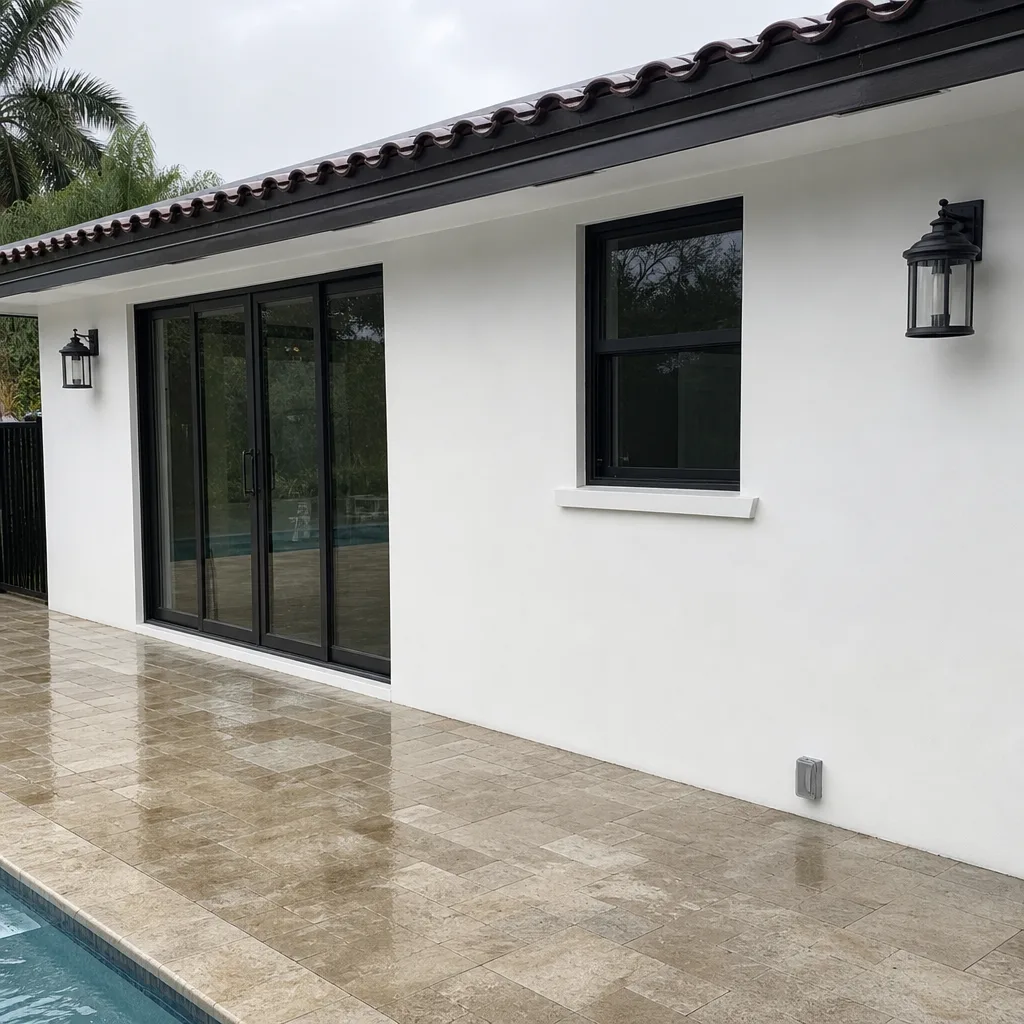
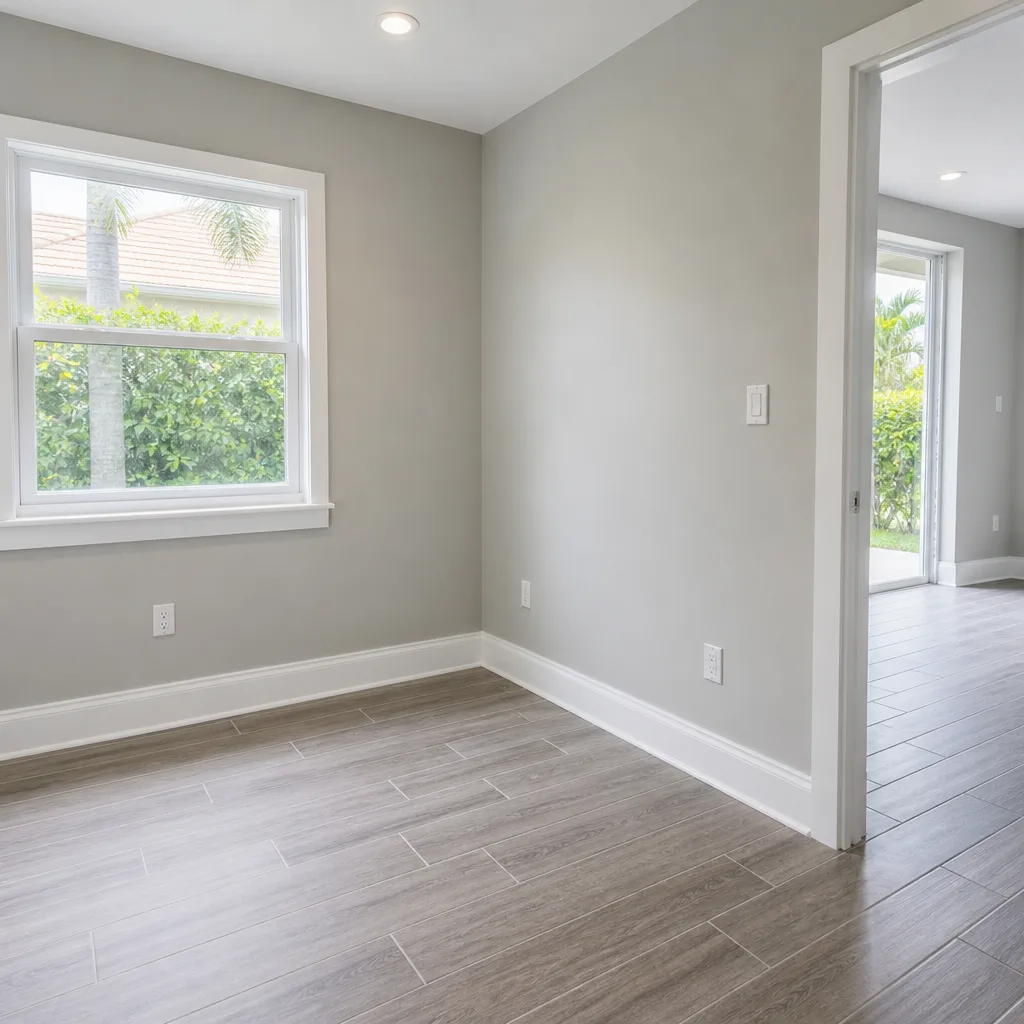
See the difference
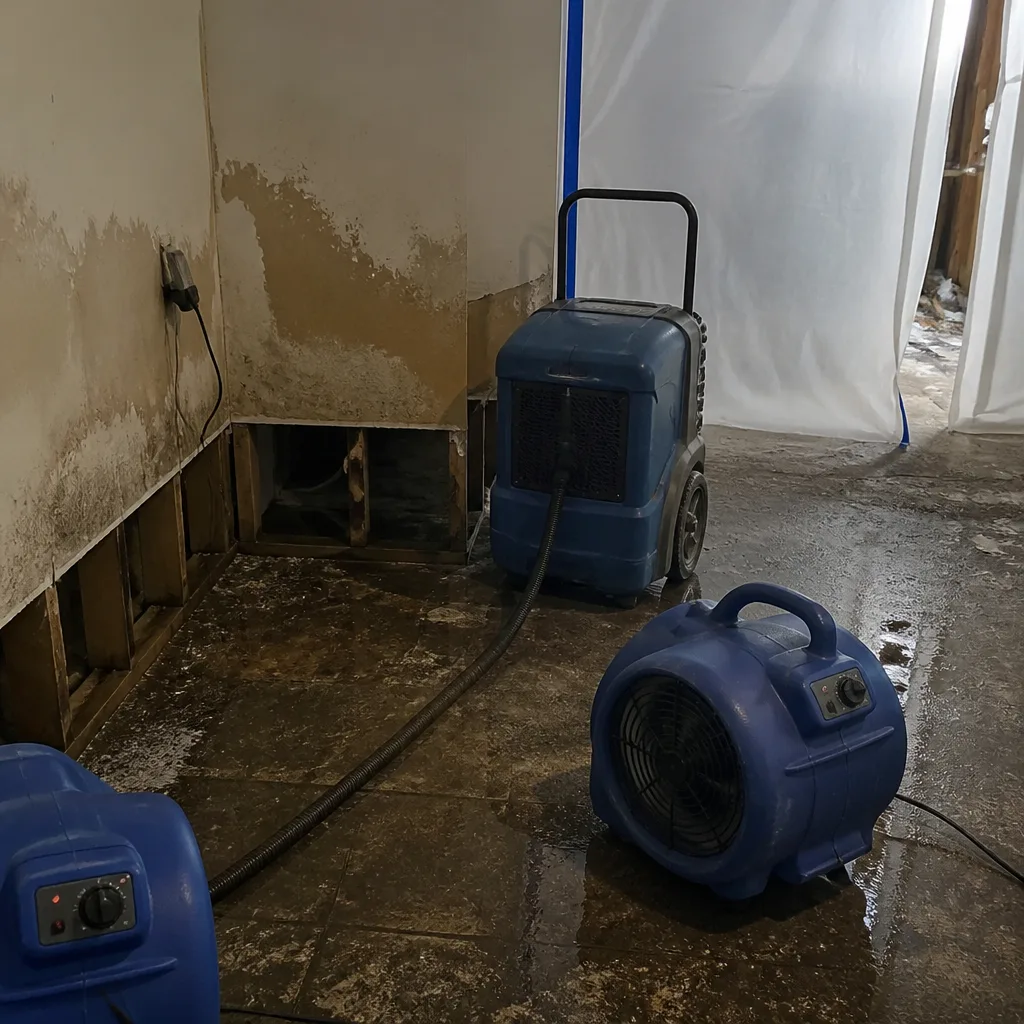 Before
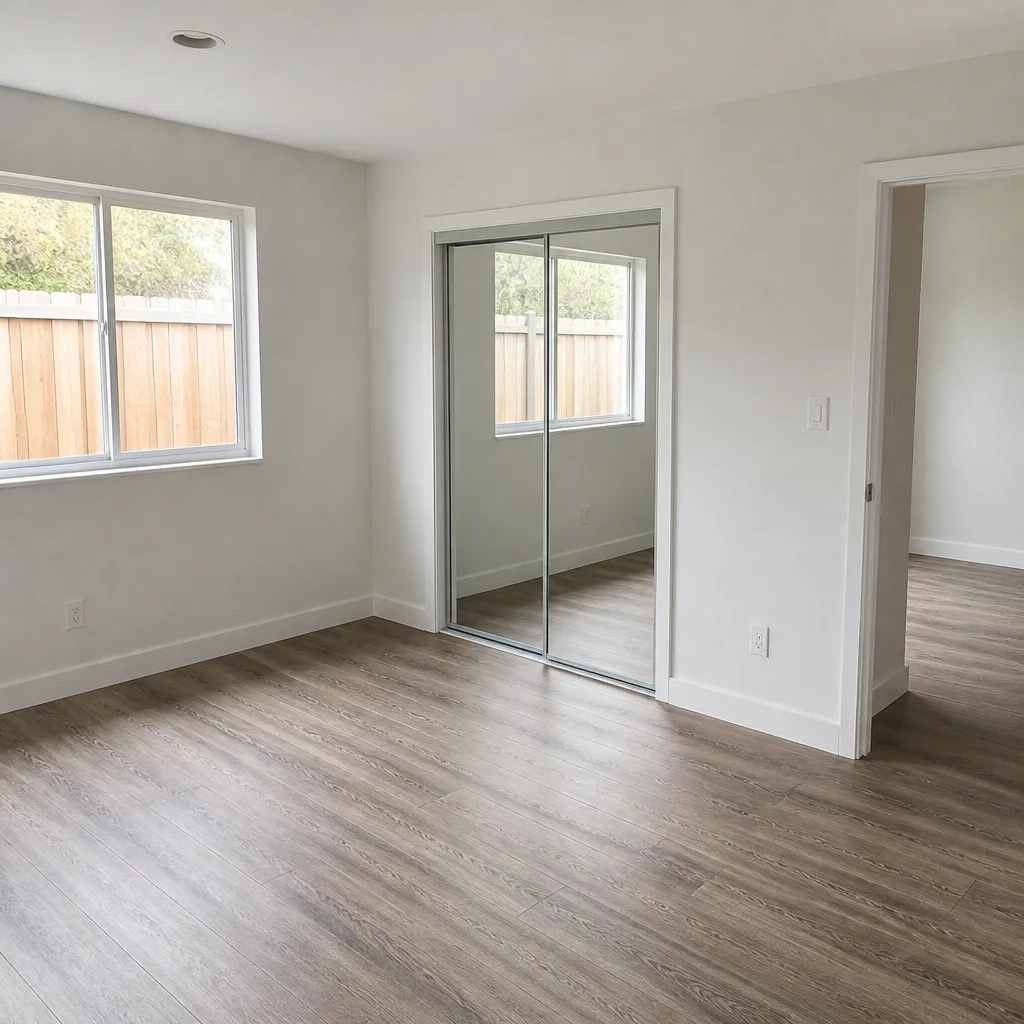 After
After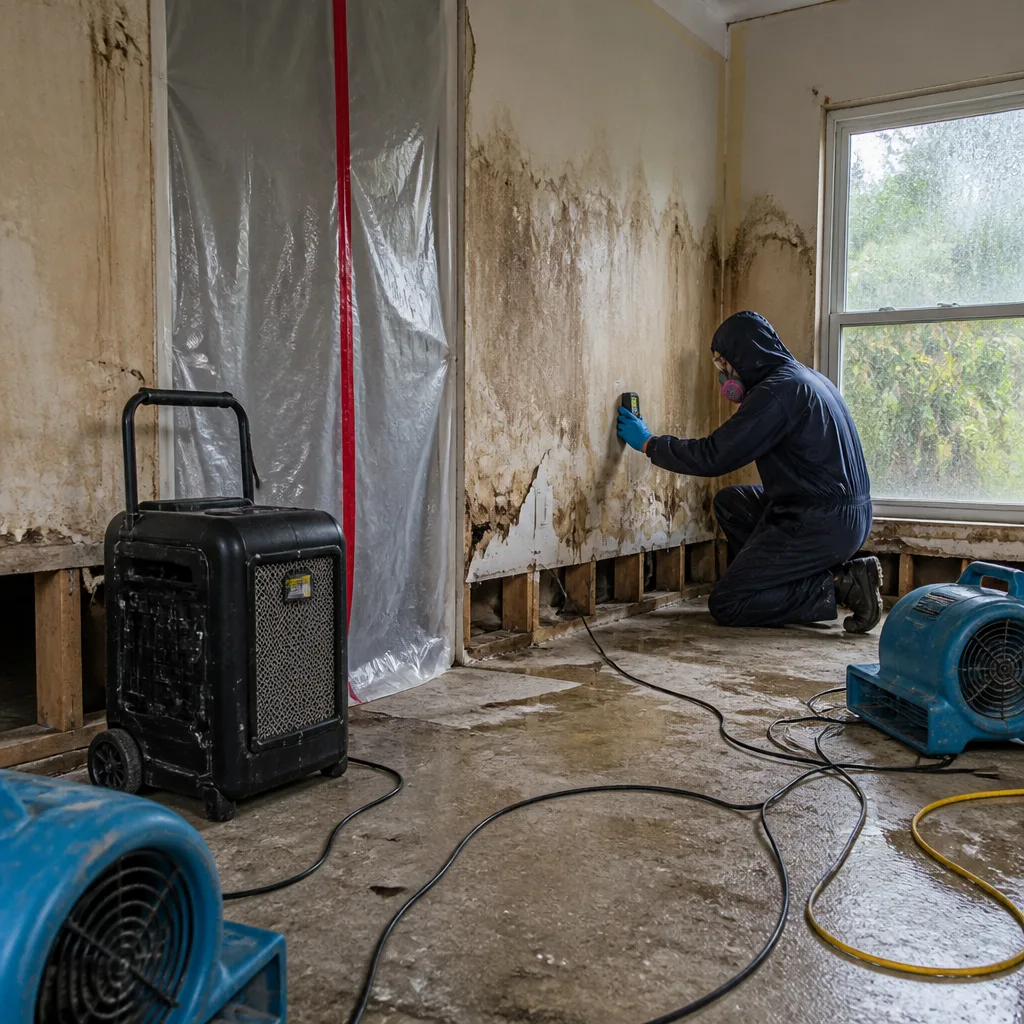 Before
 After
After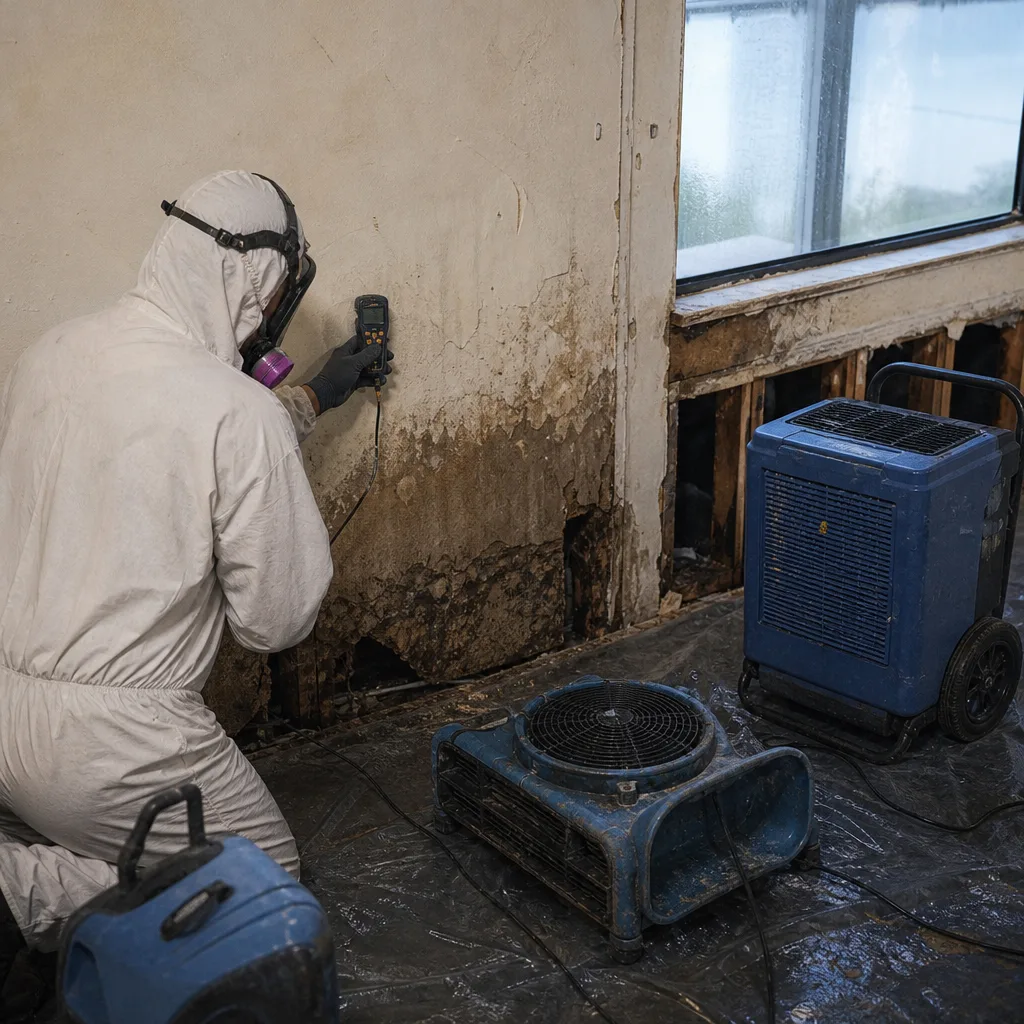 Before
 After
AfterWhen to Call a Professional
Call a professional restoration company the moment you have water that touched drywall, water you can’t extract fully with a shop vac, water from anything but a clean supply line, water that sat for more than 24 hours, or any water damage tied to a Fort Lauderdale storm event. Call before you start cutting into walls, before you buy a dehumidifier, and before you call your insurance company, because the restoration crew will document the scene before anything changes, and that documentation is what protects the claim. Dryden Restoration Fort Lauderdale answers every call live, 24 hours a day, 7 days a week, and offers free estimates throughout Fort Lauderdale. If you’re unsure whether you need us, call (754) 354-1250 and describe what you’re looking at. We’ll tell you straight.
Frequently Asked Questions
With professional drying equipment, a typical Category 1 water event in Fort Lauderdale reaches dry standard in 48 to 72 hours. With consumer-grade rental equipment, the same job often takes seven to ten days, and in many cases the materials never fully dry to the standard insurance adjusters and mold inspectors look for. For a Fort Lauderdale-specific exact estimate, call (754) 354-1250 and describe your situation, and we’ll give you a realistic timeline over the phone.
Most Florida homeowners policies cover water damage restoration when the damage results from a sudden and accidental event, like a burst pipe or a supply line failure, though flood damage from storms typically requires separate flood insurance. The coverage depends on your specific policy language, your deductible, and most importantly the documentation showing prompt mitigation. Professional restoration companies provide the moisture mapping and drying logs adjusters expect, and we work directly with insurance adjusters on most Fort Lauderdale jobs. Call (754) 354-1250 and we’ll help you understand what your policy likely covers before you commit to anything.
If the water was clean, the affected area was small, the materials dried fully within 48 hours, and nothing porous absorbed water, then cleanup and paint may be sufficient. The word “fully” is the catch in Fort Lauderdale, where ambient humidity makes full drying rare without professional equipment. If drywall was wet, if water sat for more than a day, or if you smell anything musty, the moisture is still in the wall cavity, and painting over it creates a sealed environment where mold grows behind fresh paint. A free assessment from a professional restoration company will tell you which situation you’re in.
Dryden Restoration Fort Lauderdale runs emergency response crews in Fort Lauderdale every day of the year, and for an active water event, we typically arrive within two to four hours of your call. A live person answers at (754) 354-1250, 24 hours a day, 7 days a week, and that person will give you a named arrival window, not an estimate. For non-emergency assessments and mold inspections, appointments are typically available within one to two business days.
We do, if you want us to. Dryden Restoration Fort Lauderdale works directly with insurance adjusters across Fort Lauderdale, providing the moisture documentation, photo records, and scope-of-work paperwork they require. You stay informed at every step, but you don’t have to become an insurance negotiator. The written price we give you before work begins is the same document your adjuster reviews, and our 365-Day Done Right Promise is written into every job, not just discussed over the phone.
Shut off the water source if it’s safe to reach, turn off electricity to the affected area at the breaker panel if water has contacted outlets or appliances, remove small furniture and valuables from the wet area, take timestamped photos of everything before you move it, and call (754) 354-1250. Don’t start cutting into walls or pulling up flooring, and don’t use a household vacuum cleaner to remove water. The photos and the phone call are the two actions that protect you immediately.
The Bottom Line
The DIY-versus-professional decision in Fort Lauderdale isn’t about how handy you are. It’s about humidity, time, water category, and insurance documentation, and those four factors push the answer toward professional restoration for almost everything beyond a caught-early clean-water drip. Fort Lauderdale’s air doesn’t give homeowners the luxury of slow drying, and the insurance industry doesn’t reward incomplete mitigation. When the water is clean, the area is small, the clock is under 24 hours, and no drywall is wet, capable homeowners can handle the job and save real money. In every other scenario, the fastest way back to a dry, safe house is a phone call to (754) 354-1250, where a live person answers and a written price follows before any work begins.
Written by Carl Brandt, Owner at Dryden Restoration Fort Lauderdale, serving Fort Lauderdale since 2005.