
Last updated October 16, 2026
 Water damage drying
 Fire & smoke cleanup
 Mold remediation
 Storm response
 Sewage cleanup
 Reconstruction
Free visual inspection and a written scope of work before any mitigation begins - photos, moisture readings, and drying logs go in your claim file
The scope we write is the scope we bill. Anything new gets shown to you, in writing, before we touch it.
Get your free estimateDamage Restoration Permits, Codes & Inspections in FL: What You Need to Know
A Fort Lauderdale homeowner got to the closing table in 2024 only to discover the mold remediation and drywall replacement done three years earlier had never been permitted. The buyer’s inspector flagged it during the pre-purchase review. The sale fell through. The contractor who did the work didn’t answer the phone. The homeowner ended up paying roughly $4,800 out of pocket to retroactively permit and re-inspect work that should have cost a few hundred dollars in permit fees at the time. This scenario repeats across Broward County with surprising frequency, not because homeowners are careless, but because nobody tells them which restoration jobs need permits, who’s responsible for pulling them, and what happens when the paperwork isn’t closed. This guide covers exactly that for Fort Lauderdale and the surrounding Florida market.
Restoration work we handle
Quick Answer
Most structural damage restoration in Florida requires a permit through your local building department, and in Fort Lauderdale that means Broward County. Water mitigation and emergency drying typically do not need a permit, but drywall replacement over 32 square feet, electrical work in wet areas, and HVAC duct replacement almost always do. The contractor should pull the permit and call for the final inspection before you pay the final invoice, and you can verify both through the Broward County building portal yourself.
Table of Contents
- Why Florida’s Building Code Makes Restoration Different
- What Restoration Work Needs a Permit in Fort Lauderdale
- What Restoration Work Does Not Need a Permit
- How to Look Up Permits on the Broward County Portal
- Florida Building Code Moisture Standards and Post-Drying Inspections
- Mitigation Certificate vs. Final Inspection: What Insurance Needs
- What Unpermitted Restoration Work Does to Your Title
- How to Retroactively Permit Completed Work in Broward County
- Common Mistakes to Avoid
- When to Call a Professional
- Frequently Asked Questions
- The Bottom Line
Why Florida’s Building Code Makes Restoration Different
Florida operates under the Florida Building Code, or FBC, which is the strictest statewide building code in the country. It exists because Florida deals with hurricanes, tropical storms, high humidity, and salt air, all of which punish construction mistakes faster than anywhere else in the continental United States. The FBC currently in effect is the 8th Edition (2023), and Broward County enforces it with additional local amendments through the Broward County Board of Rules and Appeals. For restoration work specifically, the code spends a lot of ink on moisture management, structural integrity after water exposure, and electrical safety in areas that have been wet. A restoration job that involves removing and replacing drywall is governed by the FBC’s building and residential chapters, not just by whatever the insurance adjuster wrote in the claim. That is why the question “does this need a permit” has a different answer in Fort Lauderdale than it would in states with less demanding codes.
It’s also why our team at Dryden Restoration Fort Lauderdale home handles permit pull-through as part of the written scope on any job that requires one. Homeowners shouldn’t have to learn building code on the fly in the middle of an emergency. They should get a straightforward answer about what needs permitting, what doesn’t, and who is responsible for each piece of paper.
What Restoration Work Needs a Permit in Fort Lauderdale
Here is the practical list. These are the restoration scopes that trigger a permit requirement in Broward County, and this is the information most homeowners never receive until it’s too late.
Drywall Replacement Over 32 Square Feet
This is the one that catches people. The Florida Building Code and Broward County enforcement treat replacement of drywall exceeding 32 square feet as a structural alteration, not a cosmetic repair. If a water damage event soaked a 10-foot by 10-foot section of wall, that’s 100 square feet of drywall removal and replacement. It needs a permit. Period. Smaller drywall patches in a closet or behind a sink typically do not, but once you cross the 32-square-foot threshold, the county wants an inspection to confirm the wall assembly is intact, properly fastened, and that the moisture barrier behind it was addressed. In Fort Lauderdale’s climate, where indoor relative humidity regularly sits above 60% for months at a time, improperly dried framing behind new drywall leads to mold within a year. The permit inspection exists to catch that before the wall gets sealed.
Structural Drying That Exposes Framing
When water mitigation reaches the point where wall cavities are opened and framing is exposed to dry it properly, a permit may be required depending on the scope. The act of cutting into a wall to expose studs, floor joists, or ceiling rafters is considered modification of the building envelope. Some mitigation-only jobs stay in a gray area, and the county’s position is that if you are opening concealed spaces to alter or dry them, the permit classification depends on what gets removed and what gets reinstalled. A clean way to think about it: if we remove material to access the structure, and that material will need to be replaced to close the wall, treat the job as permit-eligible. Our experience in Fort Lauderdale is that building officials would rather see an over-permitted job than an under-permitted one, and the permit fee is almost always cheaper than the retroactive process.
Electrical Work in Wet Areas
Water and electricity do not mix, and the Florida Building Code treats any electrical repair following water exposure as a permitted activity. If water reached outlets, switches, panels, or wiring, the affected circuits need to be evaluated by a licensed electrician, and any replacement or repair gets documented through a permit. This matters in Fort Lauderdale’s older housing stock, where homes built before 1980 can have wiring that predates current grounding requirements. The inspection confirms that everything downstream of the water event is safe before power is restored. It also creates a paper trail that your insurance carrier and any future buyer can review.
HVAC Duct Replacement
Water-damaged ductwork is a hidden problem in Florida homes because air handlers and duct runs often sit in unconditioned spaces where condensation and storm moisture collect. When duct replacement is required as part of a Water Damage Restoration in Fort Lauderdale job, the mechanical portion falls under FBC Chapter 6 and requires a permit. The inspection verifies duct sizing, sealing, and insulation values. It also confirms the replacement was done with materials rated for South Florida’s humidity. Unpermitted duct replacement is one of the most common findings when unpermitted restoration work surfaces years later on a title search.
Mold Remediation With Material Removal
Mold remediation alone, meaning cleaning and treating surfaces, typically does not require a building permit. But mold remediation that involves removing and replacing drywall, insulation, or framing crosses into construction territory and inherits the same permit requirements as any other restoration job. A Mold Remediation in Fort Lauderdale project that includes the removal of water-damaged drywall over 32 square feet becomes a construction project, not just an environmental cleanup. Florida does license mold assessors and remediators separately under the Florida Department of Business and Professional Regulation, and that license covers the environmental work, but the building permit comes from Broward County. Both pieces matter.
Fire Damage Structural Repairs
Fire restoration almost always requires permits because the damage extends into framing, electrical, and sometimes the roof assembly. Any Fire Damage Restoration in Fort Lauderdale job that involves rebuilding walls, replacing burned framing members, or rewiring circuits is a permitted activity. Broward County will also want a structural inspection if the fire exposed load-bearing elements. The smoke and soot cleanup portion does not need a permit, but the rebuilding does. The line between those two scopes is another place where a clear written scope before work starts protects the homeowner.
What Restoration Work Does Not Need a Permit
Just as important as knowing what needs a permit is knowing what doesn’t, so you don’t pay for paperwork that isn’t required. These items are generally exempt from permitting requirements in Broward County:
- Water extraction and drying: Running pumps, dehumidifiers, and air movers to remove standing water and lower moisture levels does not require a permit. This is the emergency mitigation phase and it is time-sensitive. Equipment brands like Dri-Eaz and Phoenix are built for exactly this kind of rapid response work, and our crews use them daily. No county sign-off needed to dry a wet slab.
- Mold cleaning without material removal: Surface cleaning, antimicrobial treatment, and HEPA vacuuming do not require a building permit. The environmental license from the state governs this work, not a Broward County building permit.
- Small drywall patches under 32 square feet: A small hole from a plumbing inspection or a localized water stain removal stays below the threshold. The patch itself is cosmetic.
- Carpet and pad replacement: Removing wet carpet and installing new carpet or flooring on an intact subfloor typically does not require a permit. Tile and hardwood can trigger threshold reviews if subfloor work is involved.
- Content cleaning and sanitization: Cleaning and restoring personal property, furniture, and textiles falls outside building code entirely.
How to Look Up Permits on the Broward County Portal
Broward County maintains an online building permit search portal where you can see every permit ever pulled for your address, along with its current status. This is the single most useful habit a Fort Lauderdale homeowner can build when a restoration contractor is working in their home. Here’s the step-by-step process for confirming a permit exists and is closed:
- Go to the Broward County Building Code Division permit search page. You’ll need your property address, not the contractor’s name. Permits are tied to the parcel, not the vendor.
- Enter the street address and select your municipality. Fort Lauderdale falls under the county’s permitting jurisdiction for most residential work, but some addresses route through city-specific portals depending on annexation history.
- Review the list of permits. Each permit shows the scope of work, the contractor’s name, the issue date, the last inspection date, and the current status. A permit status will read as “open,” “issued,” “inspections in progress,” or “closed.”
- Check for final inspection sign-off. A permit that was issued but never received a final inspection is still open. An open permit is a title defect waiting to happen. It means the work was authorized but never verified as code-compliant.
- Confirm the contractor on the permit matches the contractor who did the work. If a sub-contractor pulled the permit and the general contractor vanished, the permit remains tied to the sub. Both names should be traceable.
Do this before you make the final payment on any restoration job that required a permit. It takes ten minutes on the portal. The final inspection should be scheduled by the contractor and the result visible as “passed” or “finaled” before the last invoice is paid. In our own process, the written scope includes the permit number once it’s issued, so the homeowner can track it themselves without asking us for updates.
Florida Building Code Moisture Standards and Post-Drying Inspections
The FBC has specific moisture management provisions that came out of Florida’s long history with mold claims after hurricanes and condominium water events. Inspectors in Broward County are trained to look for evidence that drying was done to a verifiable standard, not just “it feels dry.” The industry standard we work to is IICRC S500, the reference for professional water damage restoration. The code and the standard work together, which is why homeowners benefit when a restoration company can explain both.
Here is what a post-drying inspection in Fort Lauderdale typically reviews:
- Moisture readings in framing and subfloor: Inspectors want to see wood moisture content below 16%, which is the threshold where mold growth becomes possible. We document this using moisture meters and record readings in the job file before closing walls.
- Relative humidity in the affected area: The FBC expects interior relative humidity to be managed so that building materials can reach a stable, dry state. If the air in the space is still humid, the materials will reabsorb moisture. Drying equipment from manufacturers like Dri-Eaz is engineered to pull humidity down efficiently, and we log readings throughout the process.
- Evidence of contained mold growth: If mold remediation occurred, the inspector checks that the affected area was properly contained during removal and that remaining materials show no visible growth or elevated spore conditions.
- Electrical verification in wet areas: Any circuits that were exposed to water need verification from a licensed electrician that they are safe to energize. The inspector reviews the electrical permit and the electrician’s sign-off.
- Proper reinstallation of the building envelope: This means the vapor barrier, insulation, and drywall went back in the right configuration for South Florida’s hot-humid climate. Getting this backwards traps moisture inside the wall cavity, which is a documented cause of hidden mold in Fort Lauderdale homes.
For homeowners, the practical takeaway is this: a drying job that was done fast but not verified is a future problem with walls you can’t see behind. A written drying log with readings mapped to the IICRC standard is the difference between “the contractor said it was dry” and “the contractor proved it was dry.”
Mitigation Certificate vs. Final Inspection: What Insurance Needs
There is a persistent confusion in Florida between the mitigation certificate and the building permit final inspection, and it causes real problems at claim time. They are two different documents with two different purposes.
The mitigation certificate documents that emergency services were completed: water was extracted, affected materials were removed or dried, and the property was stabilized. This certificate is issued by the restoration contractor, not the county. Insurance carriers want it to confirm that the insured took reasonable steps to prevent further damage, which is a condition of virtually every property policy. It is not a code compliance document. It has nothing to do with building permits.
The final inspection sign-off comes from Broward County or the relevant permitting authority. It says the construction work performed under the permit was inspected and meets the Florida Building Code. This is the document that closes the permit and clears the title.
Many insurance claims close with the mitigation portion paid but the rebuild portion still open. The homeowner receives the mitigation certificate, which satisfies the claim’s emergency requirements, but the permit was never finaled because the contractor moved on to the next job. The owner doesn’t know the difference until the open permit surfaces. Our practice in Fort Lauderdale is to deliver both documents to the homeowner in one package when the job supports it: the mitigation certificate for insurance and the permit sign-off for the property record. It’s a small thing that prevents large problems later, and it’s part of the written scope before work begins, not an afterthought.
What Unpermitted Restoration Work Does to Your Title
When unpermitted work is discovered during a real estate transaction, it becomes a title defect in practical terms. The Florida title search will not necessarily flag an open permit on the first pass, because title companies verify ownership and liens, not building code compliance. But buyer’s inspectors look for exactly this, and real estate contracts in Florida often contain clauses requiring the seller to disclose unpermitted work. Here’s what happens when it surfaces:
- The sale can stall or fail. The buyer’s lender may refuse to close on a property with open permits. The buyer’s inspector will note it, the lender gets a copy, and the underwriter pauses everything until the permit is closed or the work is retroactively permitted.
- The seller becomes responsible for fixes they didn’t cause. If the contractor who did the work is unreachable, the homeowner pays for a new contractor to open walls, re-inspect, and finish the work to code. This happens every month in Broward County.
- The property’s insurability can be affected. Insurance carriers may decline coverage or increase premiums on homes where unpermitted structural or electrical work is on record. The risk profile changes.
- The county can require demolition of non-compliant work. This is rare but real. If retroactive permitting reveals work that cannot be brought into compliance without tearing it out, the county can order the removal at the owner’s expense.
For a homeowner who plans to sell within five years, the permit status of every restoration job is a financial variable. It’s not about being a stickler for paperwork. It’s about avoiding an $4,000 to $10,000 surprise at the closing table.
How to Retroactively Permit Completed Work in Broward County
If you discover unpermitted restoration work from a previous contractor, or if a permit was pulled but never finaled, Broward County does allow retroactive permitting under specific conditions. The process is slower and more expensive than doing it right the first time, but it’s not impossible. Here’s the typical sequence:
- Contact a licensed contractor who is registered with Broward County. The county will not let a homeowner pull most restoration-related permits alone. You need a licensed general contractor or a specialist in the relevant trade (electrical, mechanical, plumbing).
- Have the contractor perform a code compliance review of the existing work. This means opening enough access to inspect the work that was done. Walls may need to come open at corners or around outlets so the inspector can see the framing, moisture barriers, and connections.
- File the retroactive permit application with the county. The application includes a description of the work, photos of the current condition, and a statement explaining when and how the work was performed. Expect additional fees for the retroactive review.
- Schedule inspections. The county will send an inspector to review the work against current Florida Building Code standards, not the standards in effect when the work was originally done. This is a critical point: retroactive permitting means meeting today’s code, which can require upgrades the original job didn’t include.
- Complete any corrections and schedule re-inspection. The contractor makes whatever changes the inspector requires, then calls for a final. The permit closes when the final passes, and the title defect disappears.
Cost varies depending on the scope and what the inspector finds, but a reasonable planning number for minor retroactive drywall and framing permits in Fort Lauderdale starts around $1,000 to $2,500 in fees and contractor time before any corrective work. A larger job with electrical or HVAC involvement can run $5,000 to $7,500. Compare that to a few hundred dollars for the original permit when the work was done. The difference is the price of working with a contractor who pulls permits as a matter of course, and we include that in the written price before any work starts.
Common Mistakes to Avoid
- Paying the final invoice before the permit is finaled. Once the contractor has full payment, the incentive to return for inspections drops. Hold the final 10% until you see the final inspection sign-off on the Broward County portal. This is not adversarial; it’s standard risk management, and honest contractors expect it.
- Assuming water mitigation and reconstruction are the same as far as permits go. The mitigation phase is exempt from permitting. The reconstruction phase is not. If your contractor did both and never mentioned a permit, ask whether the reconstruction portion crossed the drywall threshold. In Fort Lauderdale’s wet climate, it usually did.
- Trusting a verbal promise that “we handle all that.” Ask for the permit number in writing. Then verify it on the portal. A contractor who is truly handling it will have a number within days of starting the job. Verbal reassurance is not a paper trail.
- Patching over water damage without addressing moisture levels. A permit inspection exists in part to verify that the structure behind the wall is dry. If the work was done unpermitted and the wall was sealed wet, you now have a mold source hidden behind finished drywall. Fort Lauderdale’s average relative humidity makes this a when-not-if scenario.
- Confusing the insurance claim payout with code compliance. The insurance carrier paid. That doesn’t mean the county inspected. Insurance claims and building permits are separate systems. The claim being closed is not the same as the permit being closed.
- Not disclosing unpermitted work when selling. Florida law requires sellers to disclose known material defects, and unpermitted work counts. Failure to disclose opens the seller to post-sale liability. The buyer’s attorney will find it eventually.
When to Call a Professional
If the water damage involved a room-sized area, any electrical component, or structural framing, you need a restoration contractor who understands Broward County permitting. The same applies if you discover open permits or unpermitted work while preparing to list your home. These situations need someone who can review what was done, determine what needs to be brought into compliance, and coordinate the county process without you having to become a building code expert. Our team at Dryden Restoration Fort Lauderdale has been doing this work in Fort Lauderdale since 2005, and every job starts with a written price before any tool is touched, including the permit fees when they apply. If you’re in Fort Lauderdale and want to know whether your restoration job needs a permit, call us at (754) 354-1250 for a free estimate and an honest answer.
Frequently Asked Questions
Emergency water extraction and structural drying do not require a building permit in Fort Lauderdale. However, the reconstruction portion of the job, including drywall replacement over 32 square feet, electrical work in wet areas, and HVAC duct replacement, does require a Broward County permit. The permit threshold applies to the repair work, not the mitigation work.
Residential restoration permits in Broward County typically cost between $150 and $600 depending on the scope of work and the valuation listed on the application. Small drywall and framing permits fall on the lower end, while permits involving electrical or mechanical work run higher due to additional inspection fees. Retroactive permits cost more, and corrective work required by the inspector is a separate expense. Call us at (754) 354-1250 and we can give you a specific number for your project.
Search your address on the Broward County building permit portal and look for any permit with a scope matching the work that was done. The permit status should show “issued” and eventually “finaled” or “closed.” If you find no permit and the work included drywall replacement over 32 square feet or any electrical repair, the work was likely unpermitted and you should address it before making final payment or selling the home.
Most property insurance policies have a line item for “reasonable and necessary” costs related to code compliance, and permit fees are generally included in that. However, coverage for retroactive permitting after a contractor failed to do it correctly is not guaranteed. The carrier may treat it as a contractor error rather than a covered peril. The cleaner path is to have the permit included in the original scope, which is what we do on every eligible job in Fort Lauderdale.
You can list it, but the open permit will likely surface during the buyer’s inspection and stall or kill the deal. Lenders often refuse to close on properties with open building permits. The recommended sequence is to close the permit before listing, either by having the original contractor finish the inspection or by hiring a new licensed contractor to complete the process.
A mitigation certificate is issued by your restoration contractor and documents that emergency water extraction, drying, and material removal were completed. A building permit is issued by Broward County and authorizes the reconstruction work, with a final inspection that confirms code compliance. Your insurance carrier may need the mitigation certificate to close the claim, but that certificate does not close the permit. Call (754) 354-1250 if you need help determining what’s still open on your property.
The Bottom Line
Florida’s building code is the toughest in the country, and Broward County stacks additional enforcement on top of it. That’s good for homeowners in the long run and inconvenient in the short run only when contractors skip the process. The practical takeaway from this guide: know which restoration scopes trigger permits, verify permits on the county portal before final payment, and understand that open permits follow your property, not your contractor. A restoration job done with proper permits and a final inspection is a property improvement with a clean title. One done without is a deferred liability waiting for a closing table. That’s the choice made in the days after the damage, not years later.
Written by Carl Brandt, Owner at Dryden Restoration Fort Lauderdale, serving Fort Lauderdale since 2005.
See the difference
 Before
 After
After Before
 After
After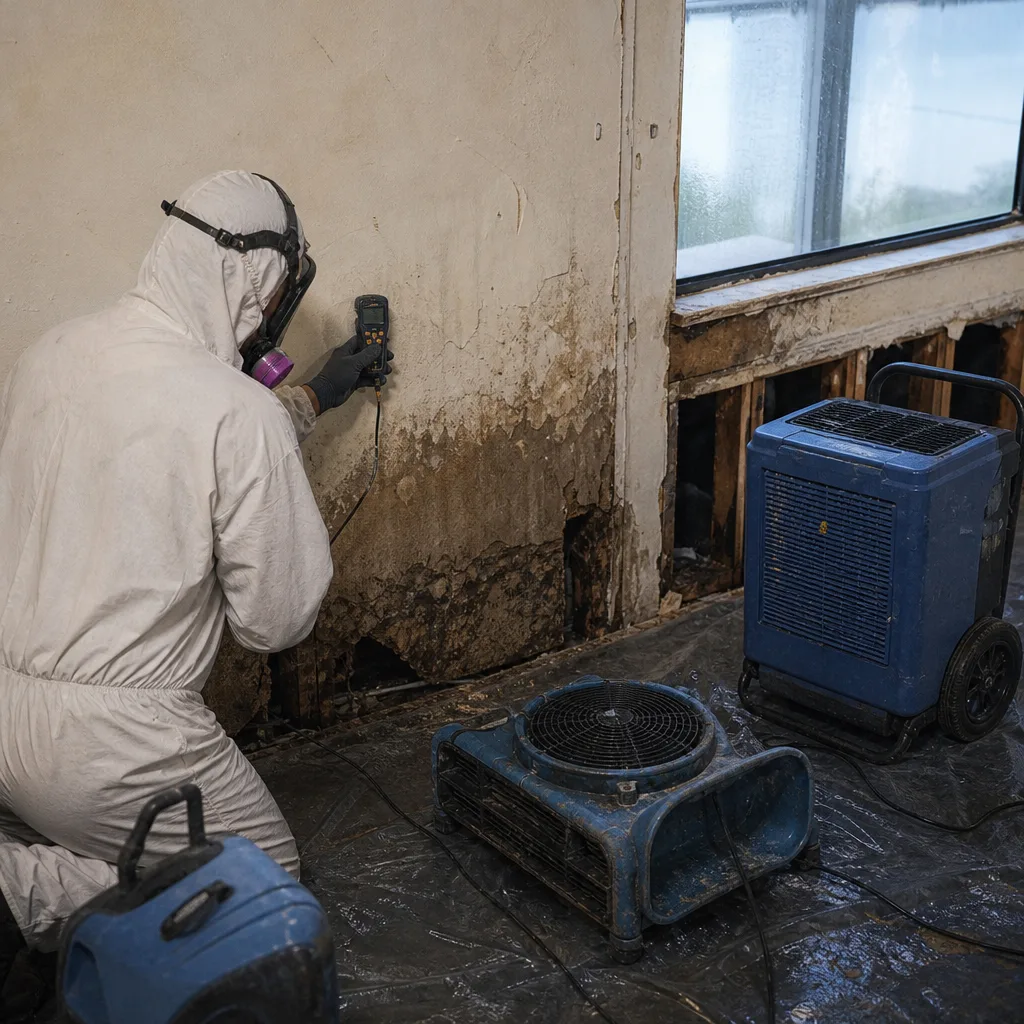 Before
 After
After