
Last updated October 16, 2026
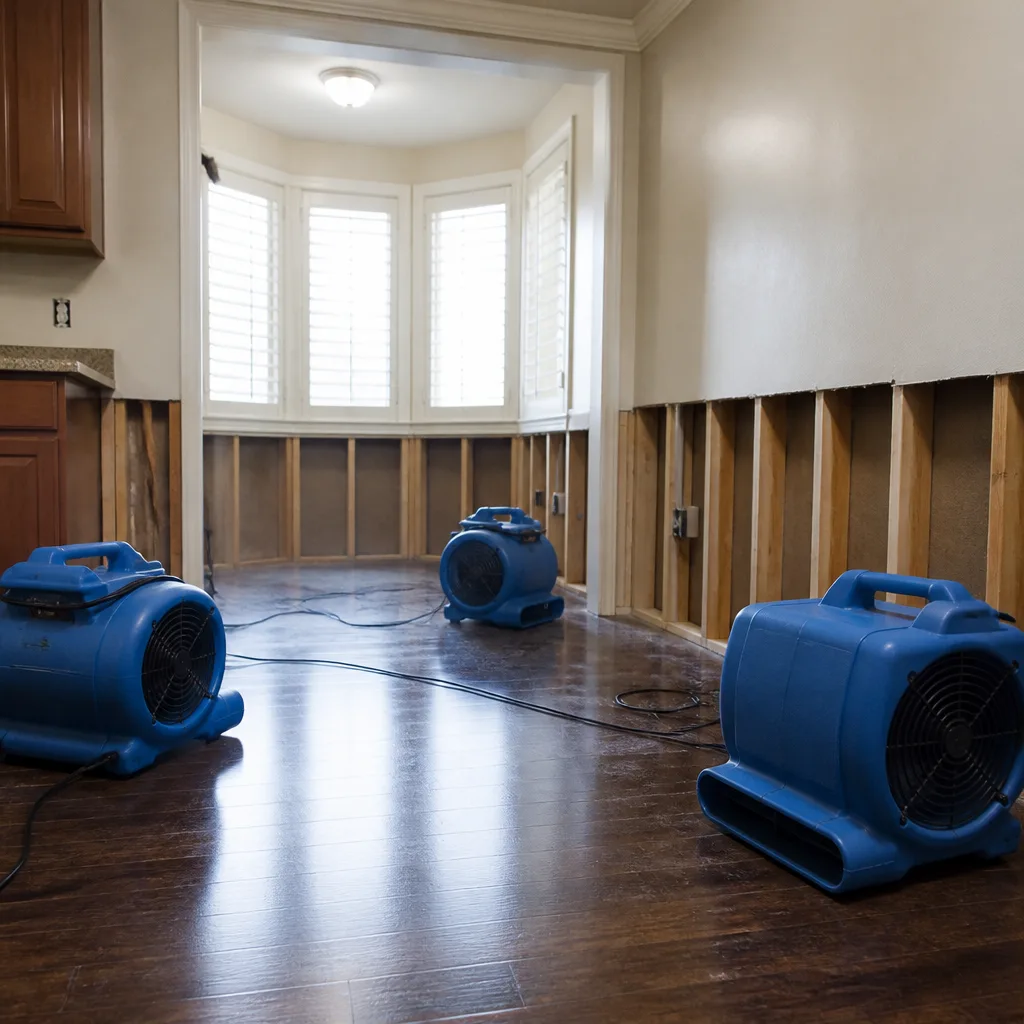 Water damage drying
 Fire & smoke cleanup
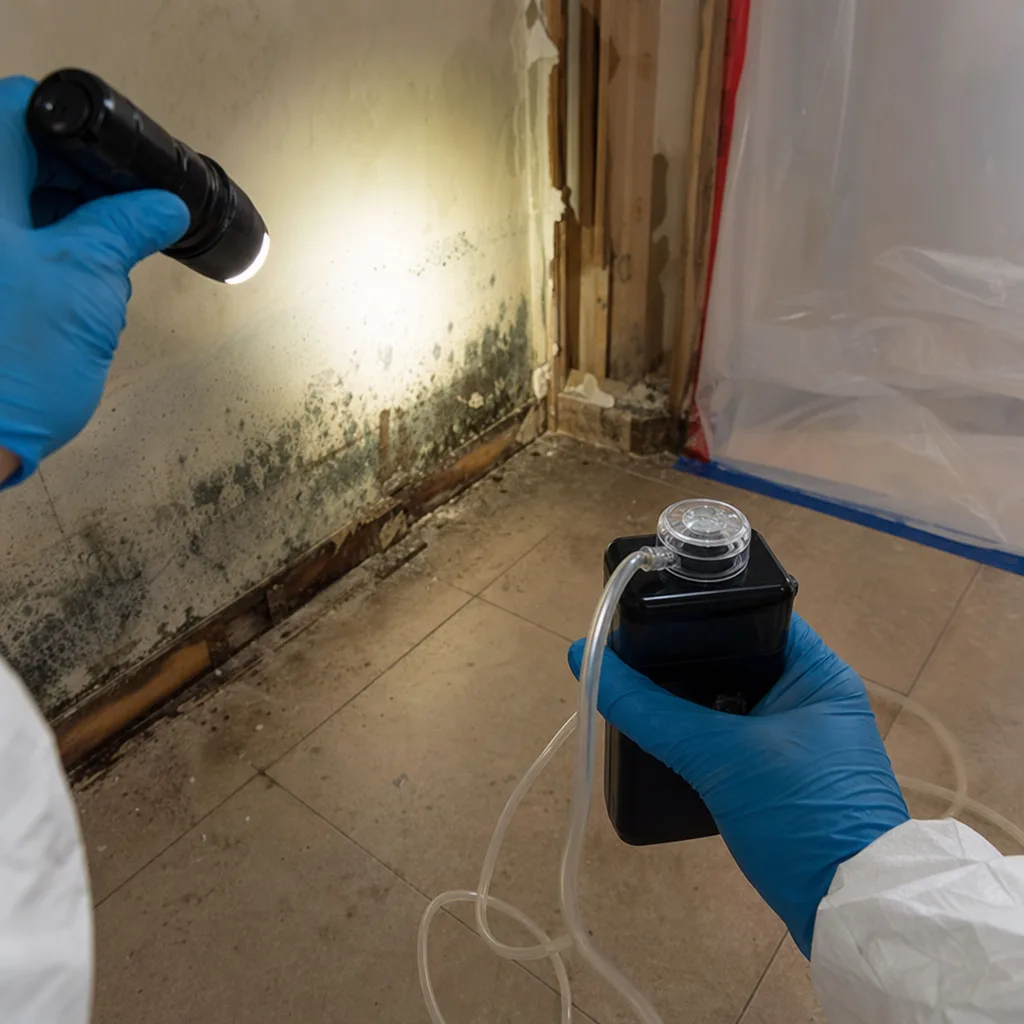
 Mold remediation
 Storm response
 Sewage cleanup
 Reconstruction
Free visual inspection and a written scope of work before any mitigation begins - photos, moisture readings, and drying logs go in your claim file
The scope we write is the scope we bill. Anything new gets shown to you, in writing, before we touch it.
Get your free estimateDamage Restoration Cost Breakdown: The Fort Lauderdale Homeowner’s Reference for 2026
Here’s a number most restoration contractors in Fort Lauderdale won’t volunteer: when a homeowner receives a $14,000 water damage quote, roughly $4,200 of that is equipment rental and labor markup. That doesn’t mean the quote is unfair. Industrial drying equipment, certified technicians, and emergency response carry real costs. But it does mean you can read the line items, ask the right questions, and confirm every dollar is warranted before you sign. This guide publishes the actual 2026 line-item ranges for Fort Lauderdale restoration work, explains what legitimately moves a price up or down, and teaches you how to read a quote so the invoice never surprises you. For DIY vs Professional Damage Restoration: The Fort Lauderdale Homeowner’s Decision Guide, see our companion resource.
Quick Answer
Water damage restoration in Fort Lauderdale typically costs between $1,200 and $7,800 for a standard single-room incident in 2026, with whole-home mitigation running $8,000 to $25,000 depending on water category, affected materials, and square footage. Mold remediation averages $2,500 to $6,500, and fire damage restoration starts around $4,000 and climbs based on smoke penetration and structural repair needs. The single largest cost driver is whether mitigation begins within 24 hours: delayed response in Fort Lauderdale’s 75% average humidity routinely turns a $2,500 dry-out into a $9,000 mold and rebuild job.
Restoration work we handle
Table of Contents
- 2026 Line-Item Cost Reference for Fort Lauderdale
- The Five Variables That Legitimately Move Your Price
- How to Read IICRC Water Categories on Your Quote
- What Insurance Covers (and What Falls to You) in Broward County
- Three Honest Ways to Reduce a Restoration Bill
- How to Read a Fort Lauderdale Restoration Quote Line by Line
- What a Restoration Timeline Actually Looks Like
- Common Mistakes to Avoid
2026 Line-Item Cost Reference for Fort Lauderdale
Before we explain what moves prices, here are the actual numbers. These ranges reflect what we see on real invoices across Fort Lauderdale neighborhoods, from Victoria Park condos to single-family homes in Rio Vista and Coral Ridge. Every restoration company sets its own rates, but these are the working averages for 2026.
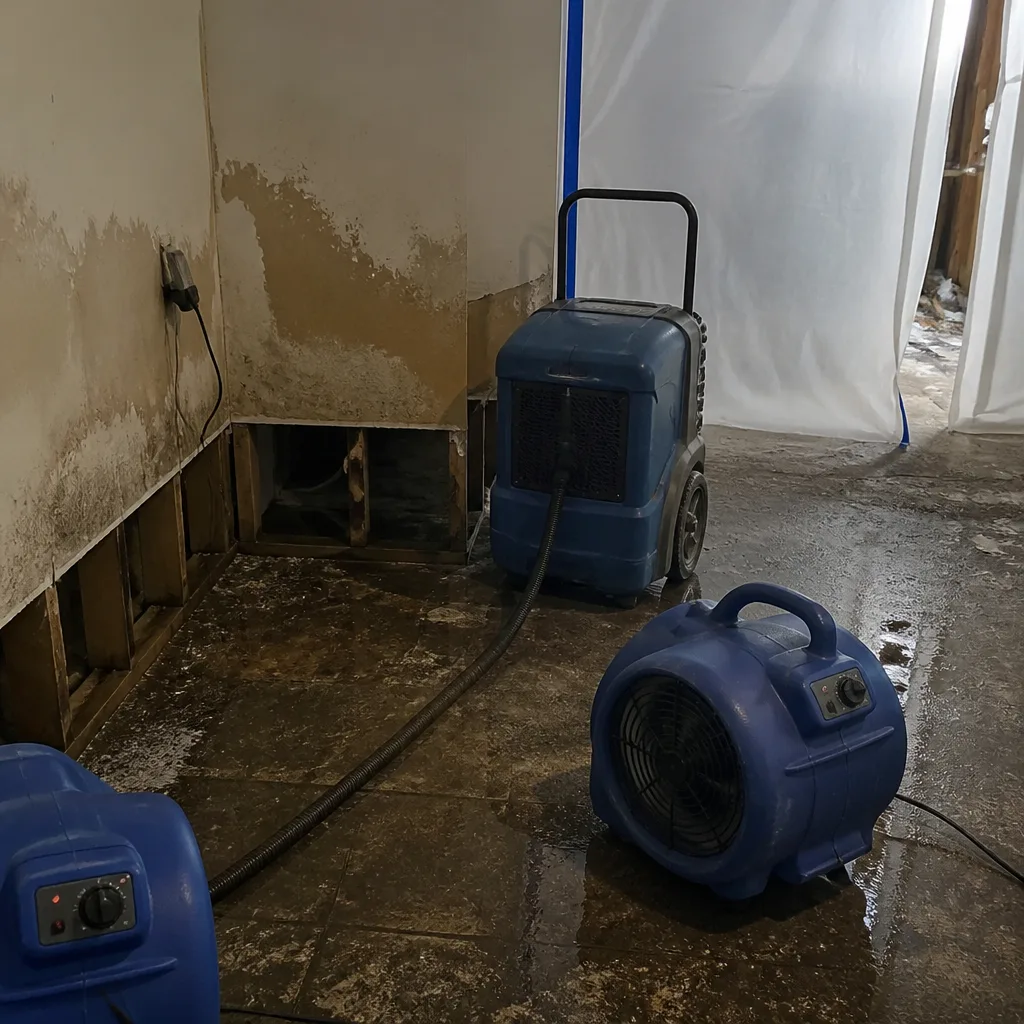
- Industrial dehumidifier deployment: $85 to $140 per day, per unit. A standard 12×14 room typically needs one to two units running for 3 to 5 days. Most Fort Lauderdale jobs require multiple units because ambient humidity never drops below 60% outside, so every unit works harder.
- Air mover (high-velocity fan) rental: $35 to $60 per day, per unit. A 200-square-foot room usually needs 3 to 4 air movers positioned for cross-ventilation airflow.
- Antimicrobial treatment: $0.75 to $1.50 per square foot of affected area. This is applied after drying to prevent mold colonization on framing, drywall, and subfloor. In Fort Lauderdale’s climate, skipping this step is a known cause of repeat mold claims within 6 to 12 months.
- Drywall removal and replacement: $3.50 to $7.00 per square foot, including disposal, new drywall, taping, and texture matching. For a 40-linear-foot run of water-damaged wall at 2 feet high, expect $280 to $560.
- Mold testing (third-party clearance): $300 to $600 for post-remediation air sampling and surface swabs, performed by an independent hygienist. This is separate from the remediation company’s own verification.
- Water extraction (standing water removal): $500 to $2,500 depending on volume, access, and whether a truck-mounted vs. portable extraction unit is required.
- Contents pack-out and storage: $1,500 to $5,000 for a whole-home emergency pack-out, including inventory, transport, climate-controlled storage, and return delivery.
- Baseboard and trim replacement: $4 to $9 per linear foot when included in water damage rebuild scope.
These line items appear individually on a properly written scope. A quote that lumps everything into one number labeled “restoration” is the first warning sign that you’re not getting the full picture. Every reputable Fort Lauderdale restoration company writes a scope that separates equipment, labor, materials, and disposal. At Dryden Restoration’s Fort Lauderdale water damage team, every job includes a line-item scope before any tool touches your property.
The Five Variables That Legitimately Move Your Price
Cost differences between two seemingly identical Fort Lauderdale water damage jobs come down to five specific factors. Understanding these gives you the vocabulary to question a quote without getting sidetracked by salesmanship.
1. Water Category (Clean, Gray, or Black)
Clean water from a supply line costs the least to remediate. Gray water from a washing machine or dishwasher discharge adds antimicrobial protocols. Black water from sewage backup or storm surge requires full containment, PPE, and often disposal of porous materials like carpet and pad. A Category 1 kitchen sink overflow in a Fort Lauderdale condo might cost $1,800. The same square footage hit by Category 3 sewage from a backed-up main in Sailboat Bend could run $6,500, because everything porous gets removed and the remaining structure gets treated.
2. Affected Materials
Drywall absorbs water like a sponge and often requires cut-and-replace. CBS (concrete block and stucco) walls, common in older Fort Lauderdale construction, resist water penetration but present their own challenge: moisture trapped behind stucco can hide for weeks. Hardwood floors in neighborhoods like Colee Hammock and Tarpon River typically require drying mats rather than demolition, which costs more upfront in equipment but often saves the floor. Each material responds to water differently, and that response dictates your invoice.
3. Square Footage
Larger affected areas require proportionally more equipment. A Category 1 water heater failure in a 150-square-foot Coral Ridge laundry room might need two dehumidifiers and three air movers. The same event affecting a 1,200-square-foot open-plan living area in a Victoria Park home might need eight dehumidifiers and twenty air movers. Equipment count drives the daily rental total, and rental days drive the final number.
4. Access Difficulty
Crawlspace work under a 1950s Fort Lauderdale cottage carries a different labor cost than a same-level garage. Stair carries for equipment, tight closet spaces that impede airflow, and third-floor condo units without elevator access all add labor hours. Fort Lauderdale’s older beach-adjacent homes often have raised foundations, which means technicians work in confined, humid conditions that slow drying and extend the project by a day or two.
5. Insurance Involvement
When insurance is paying, documentation requirements expand. Photo logs, psychrometric readings (measurements of temperature, humidity, and moisture content taken daily), moisture mapping, and third-party clearance testing all add cost, and that cost is legitimate and necessary for claim approval. A cash-pay job skips some documentation, but you also lose the claim. If your Fort Lauderdale home has an HO-3 policy with a $2,500 deductible and you’re looking at a $7,000 Category 2 job, the documentation is worth it.
How to Read IICRC Water Categories on Your Quote
The IICRC (Institute of Inspection, Cleaning and Restoration Certification) classifies water damage into three categories. Your quote should reference one of these categories explicitly. If it doesn’t, ask why. Here’s what each one means for your cost, timeline, and health risk in a Fort Lauderdale home.
Category 1: Clean Water
Source: broken supply line, tub overflow, faucet leak, rainwater through an open window. No substantial contaminants. Health risk is low. In Fort Lauderdale, the clock still matters: clean water becomes Category 2 within 48 to 72 hours in a humid, 78-degree home, because microbial growth accelerates in warm, moist conditions. Typical cost: $1,200 to $3,500 for a contained room. Timeline: 2 to 4 days including drying and minor drywall repair.
Category 2: Gray Water
Source: washing machine discharge, dishwasher overflow, toilet overflow without solid waste, aquarium leaks. Contains significant biological or chemical contamination. Health risk is moderate, and every porous material the water touched must be either thoroughly sanitized or removed. Typical cost: $3,500 to $8,000 for mitigation, plus $2,000 to $6,000 for floor or drywall replacement depending on materials. Timeline: 5 to 10 days including rebuild.
Category 3: Black Water
Source: sewage backup, Fort Lauderdale storm surge, canal flood water, toilet overflow with solid waste. Contains pathogens, bacteria, and in flood events, whatever the water picked up on its way through the neighborhood. Health risk is significant, and this is the category where DIY becomes genuinely dangerous. Porous materials (carpet, pad, upholstered furniture, some drywall) are typically disposed of rather than dried. Typical cost: $7,000 to $25,000 depending on affected area and depth. Timeline: 1 to 3 weeks with full containment, demolition, drying, and rebuild.
One note on IICRC: it is a training and certification body, not a regulatory agency. A company that performs work to IICRC standards uses the category system, the drying log protocols, and the moisture-mapping techniques the Institute teaches. At Dryden Restoration Fort Lauderdale, our technicians work to IICRC standards and explain every category and reading in plain language before work begins.
What Insurance Covers (and What Falls to You) in Broward County
Most Fort Lauderdale single-family homes carry an HO-3 policy, which is the standard “special form” homeowner’s policy. Here’s the practical translation for restoration costs in 2026.
What’s typically covered
- Sudden and accidental water damage: a burst supply line, a water heater failure, an appliance leak. If it happened suddenly and wasn’t the result of neglect, your policy likely covers mitigation and repair.
- Fire and smoke damage: structural repair, contents cleaning, and smoke odor removal are standard coverages, subject to your dwelling and contents limits.
- Wind-driven rain damage: Fort Lauderdale’s most common storm claim. If a named storm damages your roof and water enters, the water damage that follows is typically covered, but hurricane deductibles apply (usually 2% to 5% of dwelling coverage, which on a $500,000 home means a $10,000 to $25,000 deductible before the carrier pays a dollar).
- Mold remediation: covered only when the mold resulted from a covered water loss, and usually capped in Florida policies at $10,000 unless you purchased a higher mold endorsement.
What typically falls to you
- Gradual leaks: a slow drip under the kitchen sink that’s been happening for months is considered maintenance failure, not a sudden event. Most carriers deny coverage, which is why a $400 plumber visit is always cheaper than a $4,000 restoration.
- Mold from humidity or condensation: Fort Lauderdale’s ambient humidity breeds mold in closets and behind furniture with no water event at all. Standard policies exclude this as a maintenance issue.
- Your deductible: on a $12,000 Category 2 job with a $2,500 deductible, the carrier pays $9,500 and you pay $2,500. That math changes if you carry a higher deductible to keep premiums down.
- Mold testing beyond coverage caps: if your policy caps mold at $10,000 and the job runs $13,000, the difference is yours.
Here’s a bridge both sides can cross: Fort Lauderdale mold remediation claims succeed or fail on documentation. The adjuster needs daily moisture readings, photo logs, and a clear mitigation plan. A restoration company that provides that documentation makes the claim process straightforward. One that doesn’t leaves you arguing with the carrier two weeks in.
Three Honest Ways to Reduce a Restoration Bill
There’s a difference between lowering your bill and compromising the job. Here are three legitimate ways to reduce cost without cutting corners.
1. Schedule Non-Emergency Work During Off-Peak Months
Fort Lauderdale’s restoration calendar peaks during hurricane season (June through November) and during the winter dry-season spike in plumbing failures from temperature swings. If your job is non-emergency, like drywall replacement after a past leak or a scheduled mold remediation that isn’t actively spreading, ask about scheduling in late spring or early fall. Off-peak scheduling sometimes reduces equipment rates and almost always gets you faster crew availability.
2. Bundle Adjacent Repairs
If you’re already paying for drywall repair in one room and you know the adjacent hallway has water staining from a past incident, bundling both into one scope saves on mobilization, equipment setup, and disposal fees. The same logic applies to baseboard replacement: if a room is already down to the studs, replacing baseboards now costs less than a separate visit later. We’ve seen this save Fort Lauderdale homeowners 15% to 25% on combined scopes compared to separate jobs.
3. Get a Written Scope Before Emergency Mitigation Begins
This is the single biggest cost control available. When a company writes a scope of work before touching your property, you see every dehumidifier, every labor hour, and every material line. You can question items before they’re billed, not after. You can compare the scope against the daily drying log. You have a number in writing. The alternative, authorizing work over the phone during an emergency, is how homeowners end up with invoices they never saw coming.
At Dryden Restoration Fort Lauderdale, the written scope before work begins isn’t an option. It’s The Kingswell Way, and it’s been how we’ve operated since 2005. Say the price before the work. Show up in the window we gave. Leave the place cleaner than we found it. Put the guarantee in writing. Come back if it fails.
How to Read a Fort Lauderdale Restoration Quote Line by Line
A legitimate restoration quote in Fort Lauderdale has a structure. Once you know the structure, you can evaluate any quote in five minutes. Here’s what to look for, in order.
- Job summary: the first block should state the date of loss, the water category (Category 1, 2, or 3), the affected square footage, and the affected materials. If this line is missing, the quote was written by someone who never saw the job.
- Equipment list: each dehumidifier, air mover, and drying mat should be listed by type and daily rate. Look for professional-grade equipment names you recognize: Dri-Eaz, Phoenix, XPOWER, B-Air, Injectidry. Consumer-grade fans don’t produce the cubic feet per minute (CFM) needed for structural drying, and a quote full of “floor fans” is a red flag.
- Labor breakdown: separate the labor for extraction, demolition, drying setup, monitoring visits, and rebuild. A legitimate quote shows labor as distinct line items, not a lump sum.
- Materials: drywall, baseboard, paint, texture, antimicrobial solution all belong on their own lines with per-square-foot or per-unit pricing.
- Disposal: demolition debris from water and mold work is classified as construction waste, and Fort Lauderdale transfer station fees are what they are. A quote should show a disposal line, not bury it.
- Monitoring: expect a line for daily or twice-daily site visits during the drying phase. The technician takes psychrometric readings (temperature, relative humidity, grain depression, the numbers that tell you whether the structure is actually drying) and adjusts equipment placement. This is not optional in Fort Lauderdale’s climate.
- Clearance testing: if mold is involved, look for a line that references third-party clearance testing by an independent hygienist. This confirms the job worked.
If a Fort Lauderdale quote shows none of this structure, that’s not a discount. That’s a leap of faith.
What a Restoration Timeline Actually Looks Like
The timeline is part of the cost equation, because equipment runs daily and labor accrues daily. Here’s the honest sequence for a typical Category 2 water loss in a Fort Lauderdale single-family home.
- Day 1, hour 0 to 3: emergency response arrives. You should have a live person on the phone and a named arrival window, not a call-back queue. Extraction begins. Water removal takes 2 to 6 hours depending on volume.
- Day 1, hour 3 to 6: equipment placement. Dehumidifiers, air movers, and possibly Injectidry drying mats go down. The first psychrometric baseline reading is taken.
- Days 2 to 5: monitoring visits. Readings are logged daily. Equipment is repositioned based on evaporation rates. This is where the daily rental charges accrue.
- Days 5 to 7: drying goal reached. The structure hits the target moisture content readings. Equipment is removed.
- Days 7 to 10: rebuild begins. Drywall, baseboard, and paint are installed to match the existing finish.
- Day 10 to 14: final walkthrough, third-party clearance (if mold was involved), and the written 365-Day guarantee is handed to you.
That’s the sequence for a contained job. A Category 3 sewage loss or a whole-home storm surge adds 7 to 14 days for containment, demolition, and a longer dry-out. The timeline matters because every additional day of equipment rental is an additional cost, which is why a dry-out that stalls at day 8 in Fort Lauderdale’s heat is a sign that the equipment is undersized or the drying plan was never adjusted based on daily readings.
Common Mistakes to Avoid
- Waiting “a few days” to see if it dries on its own. In Fort Lauderdale, a wet wall cavity does not dry on its own. It grows mold. By day 4, a $2,000 dry-out is a $6,000 mold remediation. Call on day 1.
- Accepting a quote with no line items. A single-number quote is a blank check. If the company won’t itemize equipment, labor, and materials before starting, that’s the invoice surprise waiting to happen.
- Signing an emergency authorization form without reading it. Some forms include a clause permitting the company to bill “reasonable and customary” rates for work not yet scoped. You’re signing up for a number you haven’t seen. Ask for the scope first.
- Using dehumidifiers from a hardware store for structural drying. A consumer-grade dehumidifier pulls 20 to 30 pints per day. A professional LGR (low-grain refrigerant) unit from Dri-Eaz pulls 130-plus pints in Fort Lauderdale’s humidity. The hardware-store unit runs for a week, the wall stays wet, and you pay for mold remediation on top.
- Filing an insurance claim without documentation. If you call the carrier before the restoration company has moisture readings, photos, and a drying plan, the claim process stalls and the adjuster has less to work with. Start documentation on day 1.
- Skipping antimicrobial treatment to save $1 per square foot. In Fort Lauderdale’s climate, untreated framing behind new drywall is how repeat mold claims happen. The $300 you save becomes a $4,000 problem in eight months.
- Not asking about the guarantee. A written guarantee with a defined trigger, a documented return visit clause, and a time period in writing is the difference between a contractor who stands behind the work and one who disappears after final payment. The 365-Day Done Right Promise at Dryden Restoration Fort Lauderdale says this in writing: if a covered repair fails within a full year, we return and make it right at no charge.
See the difference
 Before
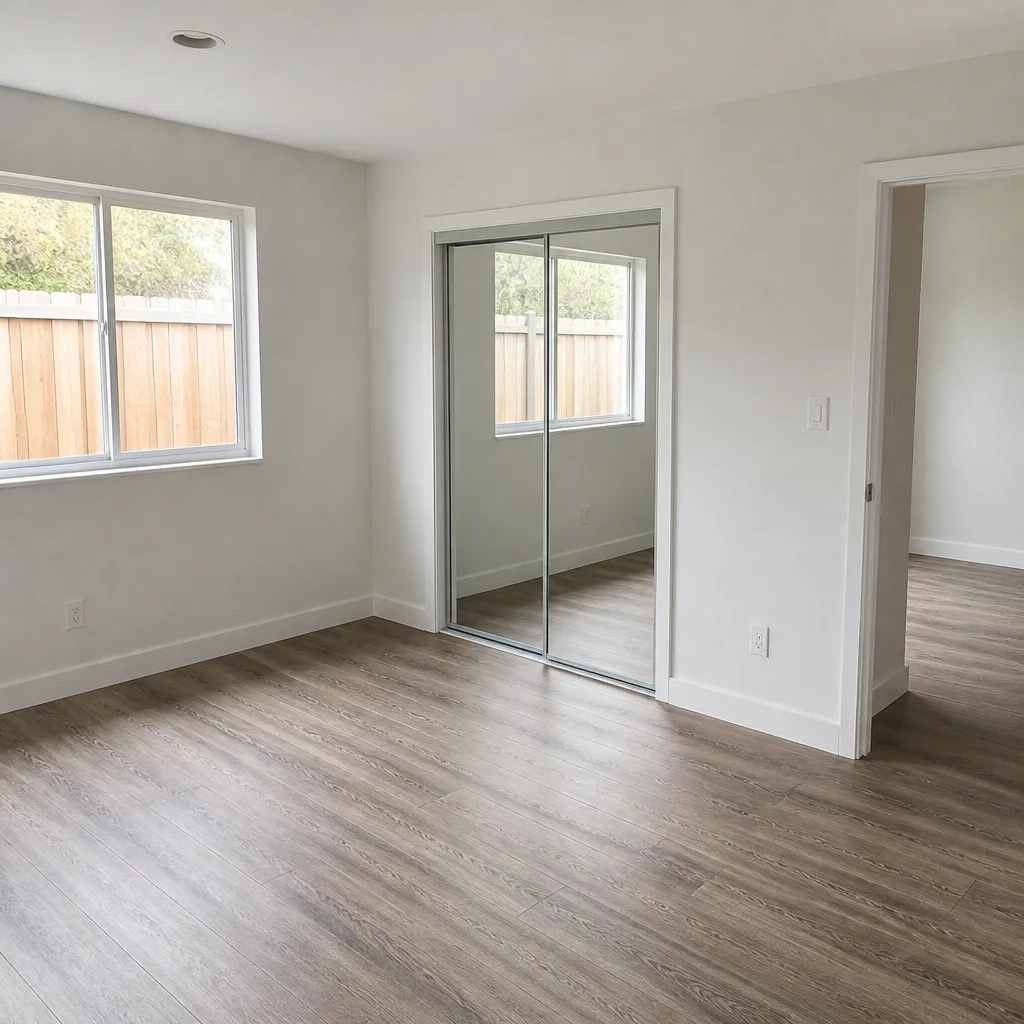 After
After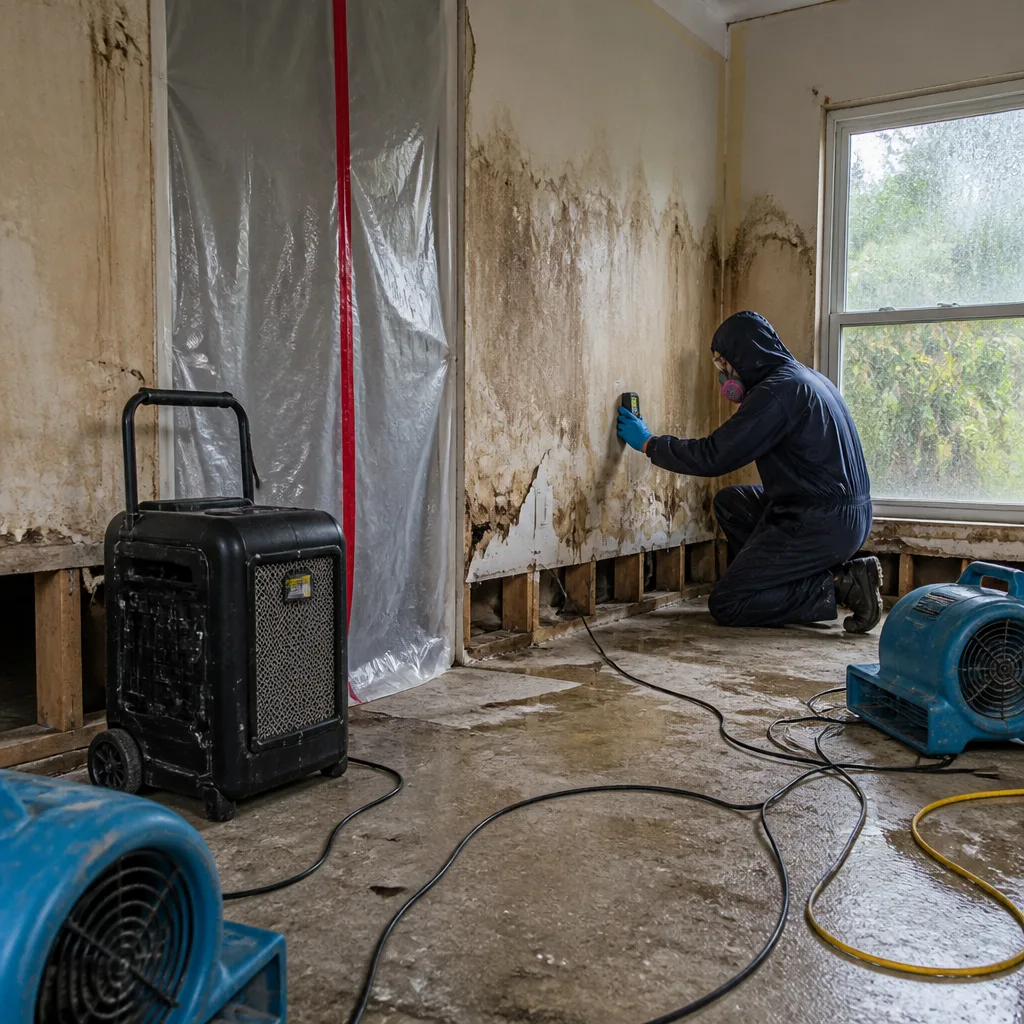 Before
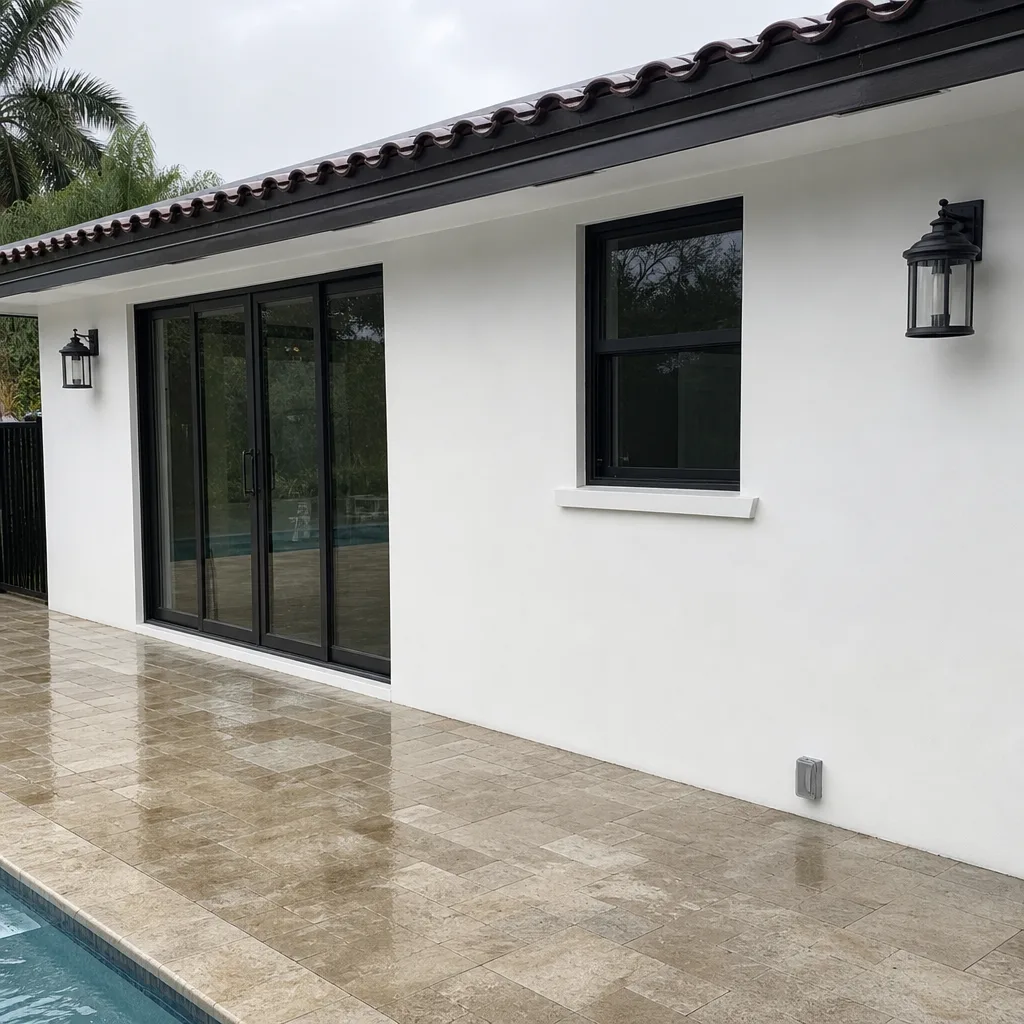 After
After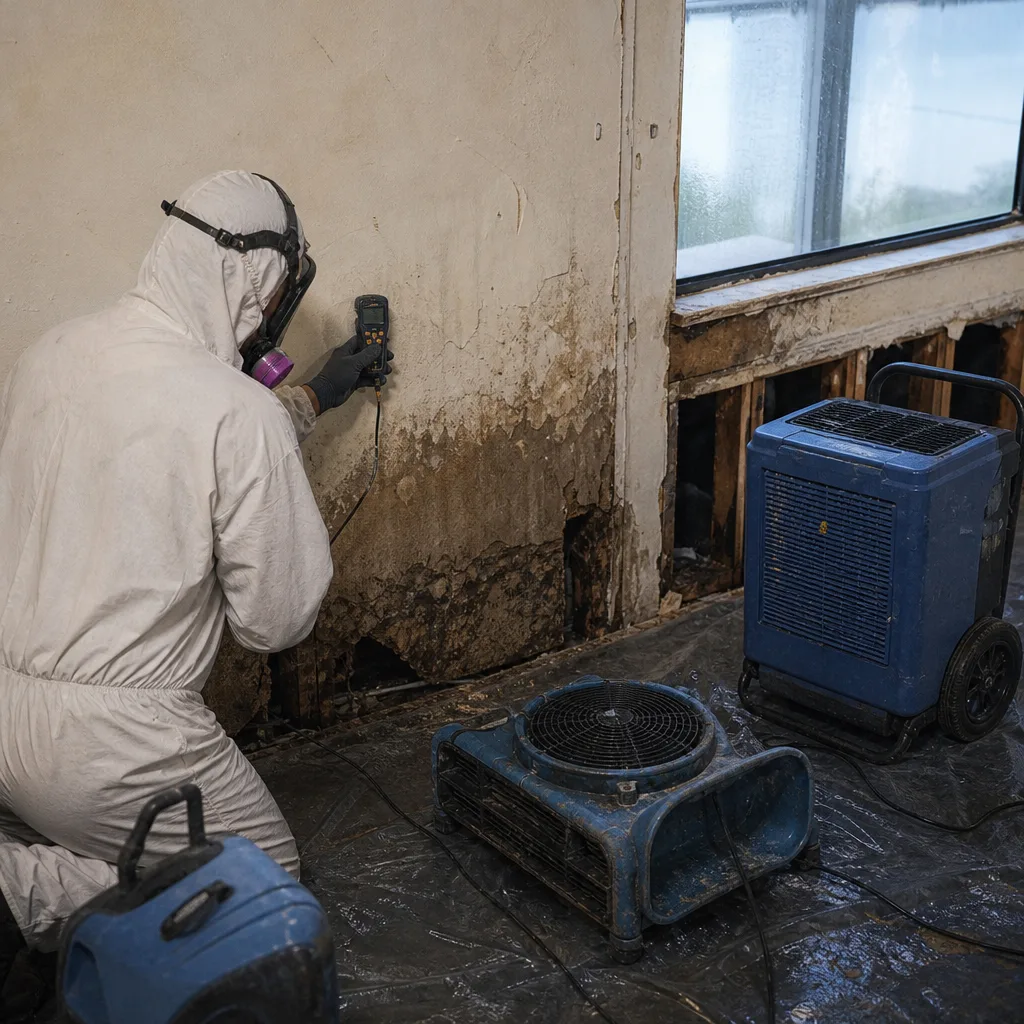 Before
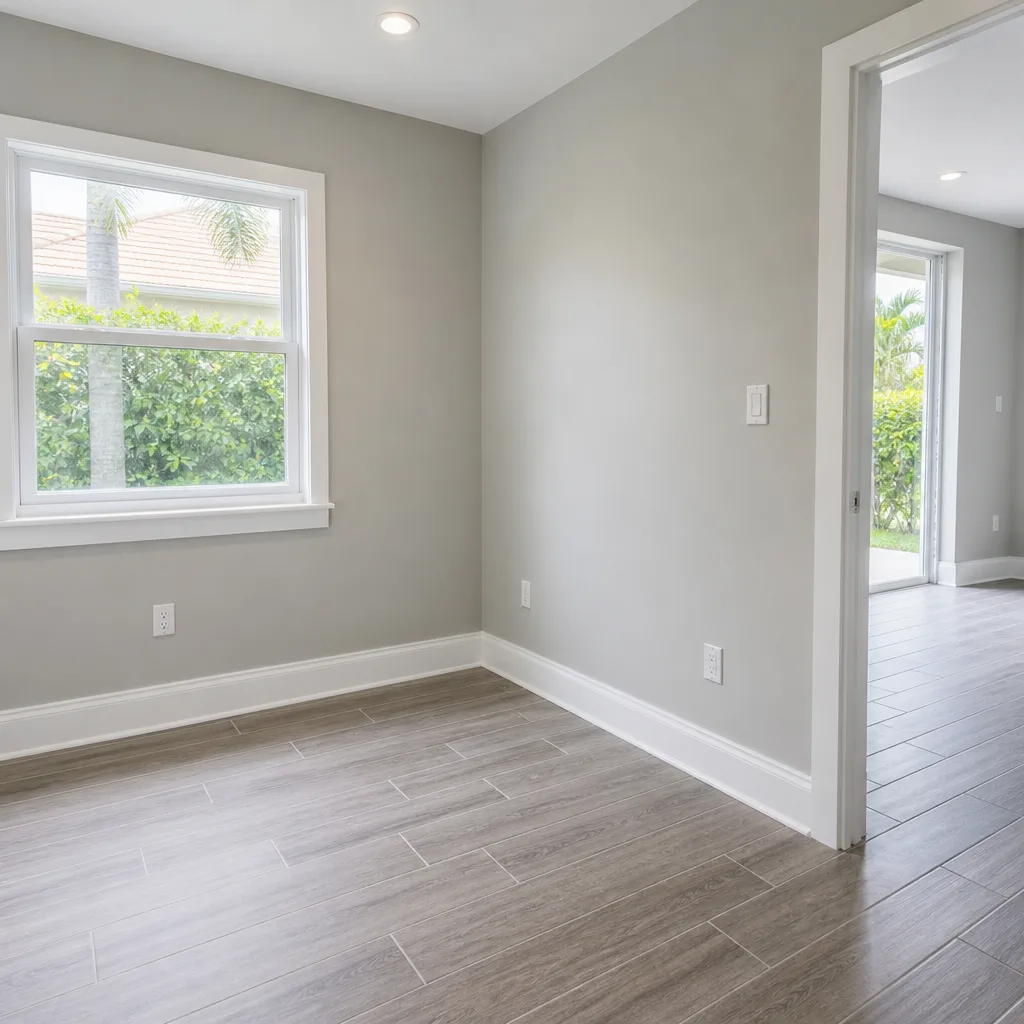 After
AfterWhen to Call a Professional
Call a restoration professional whenever water has contacted drywall, flooring, or framing for more than a few hours, whenever you can smell a musty odor that doesn’t resolve, and immediately in any sewage, black water, or storm surge event. If you see visible mold growth larger than a dinner plate, stop investigating and make the call. Fort Lauderdale’s humidity means every hour of delay is working against you. Dryden Restoration Fort Lauderdale offers free estimates throughout Fort Lauderdale, from Rio Vista to Coral Ridge to Victoria Park. Call (754) 354-1250 and a live person answers, 24 hours a day, 7 days a week.
Frequently Asked Questions
Expect $1,200 to $7,800 for a contained single-room water loss and $8,000 to $25,000 for whole-home mitigation, with the final number set by water category, affected materials, square footage, and how quickly mitigation begins. A Category 1 kitchen sink overflow is the low end; Category 3 sewage backup is the high end.
Yes, if the damage was sudden and accidental, like a burst pipe or water heater failure, and no if it was a gradual leak, humidity-driven mold, or flood surge without a separate flood policy. Your HO-3 policy covers most sudden water and fire losses, subject to your deductible and any policy-specific caps on mold remediation.
A reputable Fort Lauderdale restoration company should have a live person on the phone within minutes and a crew on site within 2 to 4 hours for water emergencies. At Dryden Restoration Fort Lauderdale, a live person answers every call, every hour of every day, and you get a named arrival window, not an open-ended estimate.
If the visible mold covers less than 10 square feet and the source of moisture is fixed, cleaning with the right product can work. Anything larger, or any mold behind drywall where you can’t see the extent, requires professional containment and remediation. Fort Lauderdale’s humidity means surface cleaning often leaves enough moisture behind the wall for regrowth within months.
A full-service restoration company should coordinate directly with your adjuster, providing daily moisture readings, photo logs, and the scope of work the carrier needs to process the claim. At Dryden Restoration Fort Lauderdale, we handle adjuster communication throughout the job, so you’re not translating restoration language into insurance language on your own.
At Dryden Restoration Fort Lauderdale, the 365-Day Done Right Promise covers the repair work we performed: if the affected area shows renewed moisture problems, mold regrowth, or a material failure from our workmanship within one year, we return and correct it at no charge. The guarantee is written, not verbal, and the trigger is simple: the repair fails, we come back. Call (754) 354-1250 and we’ll walk you through what’s covered before any work starts.
The Bottom Line
Fort Lauderdale restoration costs in 2026 range from about $1,200 for a contained clean-water incident to $25,000 or more for Category 3 sewage or storm surge damage. The number you pay depends on five legitimate variables: water category, affected materials, square footage, access difficulty, and insurance involvement. You control the outcome by understanding IICRC classifications, reading quotes line by line, and insisting on a written scope before emergency mitigation begins. At Dryden Restoration’s Fort Lauderdale fire and smoke team, and across all our restoration work, the written price before any tool is touched has been standard practice since 2005. It’s not a sales tactic. It’s a commitment we make in writing, on every job, in every Fort Lauderdale neighborhood we serve.
Written by Carl Brandt, Owner at Dryden Restoration Fort Lauderdale, serving Fort Lauderdale since 2005. Browse more guides & resources on protecting your home.